Moustache Pete: Israel's New Labor Commissar
By: Steven Plaut
The victory of Amir Peretz over Shimon Peres in the Nov. 9 Labor Party primaries all but guarantees the victory of the Likud in Israel`s next national election. It also makes it quite likely that the Labor Party will now shrink into insignificance and irrelevance as the Peretz victory will serve as a shot in the arm for the nearly extinct left-wing Meretz Party.
The most dramatic ramification of all, of course, is that Peretz's triumph at long last puts an end to the career of Shimon Peres, the holder of Israel's record for political failure. Having lost virtually every political contest he's ever fought, and coming off his shocking and embarrassing defeat at the hands of the unschooled Peretz, Peres is finished politically. (Peres responded to his loss to Peretz with a show of ungraciousness, refusing to call Peretz to congratulate him and threatening to challenge the primary results in court.)
The amazing thing is that Shimon Peres managed to impose so many of his ideas on Israel without ever winning an election. The Oslo “peace process” was by and large Peres's initiative. It was imposed on Israel by Yitzhak Rabin, who was willing to follow Peres's lead on statecraft even though he'd been elected on a platform flatly rejecting any Oslo-like strategy.
Peres in time managed to use the shock in Israel over the assassination of Rabin to neutralize what had been growing opposition to the Rabin-Peres initiative. Later, the visionless leaders of Likud also followed Peres's line and continued to pursue peace through appeasement and national self-abasement.
Enough of Peres; let us turn our attention now to Amir Peretz. The new Labor Party boss is, to put it politely, a cross between Jimmy Hoffa and Cheech. A party hack who built his career mainly by establishing a power base in Israel's corrupt Histadrut trade union federation, Peretz got as far as he has in part through fortuitously pinning his political fortunes to the tailcoats of other politicians, and in part because the establishment politicians in Labor never took him seriously enough to neuter him politically.
Born in Morocco, Peretz immigrated with his parents to Israel at the age of four. He first came to national attention in Israel in 1983 upon his election as mayor of the economically distressed working class Negev town of Sderot. This was long before the days when Sderot morphed into Israel's Stalingrad, routinely taking the brunt of rocket attacks by the PLO and its affiliates. (Peretz has been notoriously absent from Sderot during those attacks, and has had almost nothing to say about them).
A personal note: The only time I met Peretz face to face was when he invited me to testify before a Knesset committee he was chairing on health policy. Aware of his reputation as an intellectual lightweight, I made my presentation in monosyllables and simple words, but he just stared at me with uncomprehending wide eyes, apparently understanding nothing that I said.
Peretz served as a warehouse and maintenance officer in the Israeli military, sustaining a leg injury in the Sinai in 1974 when his personnel carrier was involved in an accident. After recovery he was offered the task of running a gas station, but he refused, claiming he was not “prepared to be anyone's boss on the grounds that it would constitute exploitation.”
Perhaps he was really afraid of the bookkeeping challenges involved.
Instead, he bought a small farm in an agricultural cooperative in the Negev, where he grew rose flowers. Later, after his stint as mayor of Sderot, he was pushed into minor Labor Party visibility as the token Moroccan Jew recruited by Labor leaders concerned with the party's difficulties attracting working class “Mizrachi” or Oriental-Jewish voters. (While styling itself the party of the working man, the Labor Party has long been the bastion of the middle- and upper-middle-class Ashkenazi establishment.)
Peretz has always been instantly recognizable in the media thanks to his huge Zapatista moustache. He seems to have been made for caricaturists. “I love the moustache,” he once confessed to Dalia Karpel of Haaretz. “A small moustache wouldn't suit me....”
'Laziest Member of Knesset'
Peretz was elected to the parliament in 1988. As a member of Knesset, he devoted most of his energies to prohibiting the use of out-sourcing and operation of non-unionized labor exchanges, the result being higher unemployment among low-skilled Israeli workers.
Seeing that his prospects for a senior position in Labor were close to nonexistent, he joined the disaffected faction set up by Haim Ramon in the early 1990's. Ramon considered himself a serious contender for the job of prime minister but was certain he was being blocked by the party machine. Ramon and his sidekick Peretz decided to challenge the Labor establishment inside the Histadrut trade union federation with their own dissident slate named “New Haim” (or “New Life,” a play on Ramon's first name).
In the Histadrut union elections, the Ramon team beat the Labor machine and seized control of the trade union federation, with Peretz as second in command and in charge of strike actions and trade union negotiations.
But already by then the Histadrut, once a powerful state within the Israeli state, had lost much of its muscle. It had been a stunning fall for the union behemoth: Histadrut membership cards were a sine qua non for getting a job in pre-1948 Israel and without such membership workers were barred from many jobs even into the 1970's.
Histadrut funds were always misused by the Labor Party to fund its own election campaigns. Before statehood, funds donated by Jews around the world had been funneled through the Histadrut into the coffers of MAPAI (forerunner to today's Labor) and used to build the party's power base. After 1948 Israeli taxpayer funds were similarly misappropriated for the same purpose.
By the early 1990's the Histadrut was little more than a weak and corrupt anachronism, stripped of its control of Bank Hapoalim, Israel's largest bank, after the “bank share scandal,” a large Ponzi scheme that collapsed in 1983. It also lost control of many of its insolvent pension funds, which had long served as slush funds for Histadrut commissars, and of its captive “General Sick Fund,” Israel's largest health service provider.
After beating the Laborites in the Histadrut elections, Ramon quickly tired of his trade union toy. He resigned from the leadership of the Histadrut in 1995 and turned the job over to Amir Peretz
While Ramon made his way back into the Labor Party's upper echelons, Peretz was still seeing his political ambitions stymied by the party machine. In 1999 he decided to use his power base in the Histadrut to challenge the Labor Party and set up his own competing “labor” faction, named Am Echad (One Nation).
Using funds appropriated, Jimmy Hoffa style, from trade union accounts, Peretz spent his way into the parliament as a small two-seat (later three-seat) party, though he received just 16 percent of the vote in his home town of Sderot. His victory was, however, large enough to force Labor to co-opt Peretz and his people and offer them a power share within the prty, including reserved Knesset seats in the elections slate.
In parliament Peretz only bothered to show up for about 11 percent of the votes and was dubbed the “laziest member of Knesset.” His stock reply to critics was, “I am busy with the Histadrut.”
The single largest item on his expense account, according to a Knesset report of 2001, was NIS 18,720 for private tutoring in English, a language he has never quite mastered.
Armchair Revolutionaries' Last, Great Hope
Politically, Peretz, who likes to describe himself as a “social democrat,” is associated with the Israeli Oslo Left, and was long a board member of Peace Now and the left-wing New Israel Fund. His ideas on economics are little different from those of nineteenth century socialists and syndicalists, and he dreams of turning Israel into some sort of hybrid combination of Sweden and Belarus. He has no patience for and no understanding of market economics.
As the major promoter of an ever higher minimum wage in Israel, Peretz bears a major share of responsible for the country's high unemployment rate, caused largely by that minimum wage. Peretz also led the campaign against the employment in Israel of foreign temporary workers, who today are the backbone of Israel's agricultural and construction sectors.
Had Peretz gotten his way, both those sectors would have collapsed.
While mouthing socialist slogans about the working class, Peretz actually built his power base mainly on the elitist “unions” of highly skilled, lavishly paid professionals – i.e., feather-bedded workers in government-owned or sponsored monopolies such as the Israel Electric Company, whose “workers,” including engineers and technicians, are probably the most grossly overpaid group of people in Israel. Peretz made common cause with the “workers” in this and other sectors – such as the seaports and airports – in which market competition is suppressed by the Israeli government.
Peretz consistently promoted the interests of the unionized overpaid professionals and semi-professionals at the expense of blue-collar workers – those hurt most by the frequent strikes called by the Histadrut. He single-handedly shut down Israel's airports so often that foreign businessmen were refusing to come to Israel altogether, not from a fear of terrorism but from a fear of getting stranded when the airports were shut down.
In earlier Labor Party primaries, Peretz used union funds to secure more votes than any other candidate. Even so, given Labor's inability to produce a serious contender for leadership after the debacle of Amram Mitzna's 2003 landslide loss to Ariel Sharon, support for Peretz in the primaries was far less a vote for him than it was a protest against the machine leaders.
Will Sephardic voters be enticed by a Peretz-led Labor Party? Don't count on it. Labor may have long viewed Peretz as a magical key to opening the door to bring in Sephardic voters, but Oriental Jews in Israel remain far more likely to vote for the Likud and the religious parties, and in any case Moroccan Jewish candidates do not have a very good track record in attracting the votes of non-Moroccan Oriental-Jewish voters.
The more likely effect of the Peretz nomination will be to drive away much of Labor's Ashkenazi rank and file – and some of the leaders as well. A good chunk probably will end up in the semi-Marxist Meretz Party.
The parliamentary strength of Meretz has shrunk almost to the endangered-species level, but the abandonment of Labor by the educated Ashkenazi middle class, who will be repulsed by Peretz's lowbrow blue-collar shallowness, will likely revive Meretz as a political force.
Peretz already is itching to flex his muscles in a national showdown with Sharon and is threatening to bust up the Labor-Likud National Unity government immediately to force it. And of course the coming wave of political jokes about Peretz-as-ignoramus will make all those Bush, Gore, and Quayle jokes look tame and polite by comparison.
Unless the Labor machine now topples Peretz, which it might yet do, the party is on course to losing the next election to the Likud by a much larger landslide than its last loss. But such a prospective landslide will also lower the likelihood that the Likud will abandon its current platform of “Oslo Lite” or take any courageous stand on anything. Already Commerce Minister Ehud Olmert is maneuvering to replace Ariel Sharon as Likud chief on a platform of escalated appeasement.
While mouthing the slogans of the Left about Oslo, “disengagement” and the “peace process,” Amir Peretz clearly means to make anti-market economics and “social issues” his main banners. One should bear in mind that the Israeli Left does even more damage when it gets all compassionate and concerned about “social issues” than it does when it pursues “peace.” The way it invariably pursues “social issues” is through seeking massive tax increases and budget outlays for “social needs” coupled with massive interference in market mechanisms.
But Peretz's ambitions go well beyond even that.
Should the Israeli public ever be foolish enough to allow Peretz to seize the reins of power, he will quite simply destroy the Israeli economy. He would order massive across-the-board wage increases detached from productivity considerations, which would drive countless businesses into receivership while raising unemployment to astronomical levels.
He would promote the interests of state monopolies and seek to nationalize more industry. He would suppress competition and attempt to restore the quasi-Bolshevik system of price controls and rationing that nearly caused Israel to collapse during its first years of independence, controls wisely trashed by the socialist MAPAI leaders of the 1950's when they came to the realization that these could not possibly work.
Peretz would also seek to expand the powers of the Histadrut, which all the while would operate under his fiefdom, turning it back into a state within the Israeli state – an unelected anti-democratic second government, a dictatorship of the unionized middle-class pseudo-proletariat.
It is precisely because of his promises to establish a system of socialist command-and-control central planning with trade union tyranny that some of Israel`s most foolish professors and journalists have endorsed him with such enthusiasm. Dreaming of creating a Scandinavian-style welfare state combined with “class warfare” against the big bad “industrialists,” and led by a bullying trade union mafia, these armchair revolutionaries see Peretz as the last great hope of leading Israel out of the First World and back into the Third.
Steven Plaut, a frequent contributor to The Jewish Press, is a professor at Haifa University.
From The Jewish Press, November 16, 2005
Friday, December 09, 2005
From the Jewish Chronicle
Christian Aid: co-operation and criticism
09/12/2005
By Nigel Varndell
As part of a multi-cultural and multi-faith society, Christian Aid takes its relationships with members of other religious and non-religious communities very seriously (“Sacks to vet Christian Aid texts,” JC, December 2).
My appointment to the role of interfaith and inter- community manager is indicative of a desire to build relationships with all people who share our vision of a world transformed by an end to poverty.
In the light of this, Christian Aid has started a process of dialogue with individuals and organisations that represent the full diversity of the Jewish community in the United Kingdom, both secular and religious.
We are also in conversation with other faith communities. We hope this process will prevent misunderstandings between us and foster an environment where we can work together on issues that we all hold dear: peace, justice and an end to human poverty.
Interfaith and Inter-community manager, Christian Aid,
CShelley@christian-aid.org
~~~~~~~~~~~~~~~~
Christian Aid: co-operation and criticism
09/12/2005
By (Professor) Gerald M. Steinberg
The agreement between Chief Rabbi Sacks and Christian Aid is a welcome development. The 2004 “Child of Bethlehem” appeal; support for the anti-Israel divestment campaign, and many other examples are inconsistent with language claiming support for universal human rights.
The promise of a dialogue and ad-vance consultation can both improve relations between Jews and Christi-ans in Britain, and provide a precedent for ending the bias in similar groups.
The radical political agendas of War on Want, Amnesty Internation-al, Human Rights Watch, and other groups also cause immense damage to moral principles.
Bar Ilan University, Ramat Gan, Israel
~~~~~~~~~~~~~~~~~~~~~~~
Christian Aid: co-operation and criticism
09/12/2005
By (Dr) Brian Robinson
I was surprised to read that the Chief Rabbi has asked Christian Aid if he may vet potentially controversial statements on the Middle East.
I know little about Christian Aid, but it will certainly have a legitimate concern for what happens in Beth-lehem. A recent Early Day Motion in the Commons referred to “the de-vastating impact” the combined eff-ect of the separation barrier and roadblocks was having on the city.
Bethlehem’s economy has been all but ruined, families divided and land seized. Is Christian Aid to know about such things and remain silent?
Admirable as it is that Christian Aid is anxious not to offend the Jewish community none of us can ever tolerate gratuitous offence, it is not clear from what the Chief Rabbi would consider offensive in this context. A criticism of Israeli injustice might be accurate and honest. Our shame would be if we were to think the criticism more offensive than the behaviour that provoked it.
Milton Keynes
Christian Aid: co-operation and criticism
09/12/2005
By Nigel Varndell
As part of a multi-cultural and multi-faith society, Christian Aid takes its relationships with members of other religious and non-religious communities very seriously (“Sacks to vet Christian Aid texts,” JC, December 2).
My appointment to the role of interfaith and inter- community manager is indicative of a desire to build relationships with all people who share our vision of a world transformed by an end to poverty.
In the light of this, Christian Aid has started a process of dialogue with individuals and organisations that represent the full diversity of the Jewish community in the United Kingdom, both secular and religious.
We are also in conversation with other faith communities. We hope this process will prevent misunderstandings between us and foster an environment where we can work together on issues that we all hold dear: peace, justice and an end to human poverty.
Interfaith and Inter-community manager, Christian Aid,
CShelley@christian-aid.org
~~~~~~~~~~~~~~~~
Christian Aid: co-operation and criticism
09/12/2005
By (Professor) Gerald M. Steinberg
The agreement between Chief Rabbi Sacks and Christian Aid is a welcome development. The 2004 “Child of Bethlehem” appeal; support for the anti-Israel divestment campaign, and many other examples are inconsistent with language claiming support for universal human rights.
The promise of a dialogue and ad-vance consultation can both improve relations between Jews and Christi-ans in Britain, and provide a precedent for ending the bias in similar groups.
The radical political agendas of War on Want, Amnesty Internation-al, Human Rights Watch, and other groups also cause immense damage to moral principles.
Bar Ilan University, Ramat Gan, Israel
~~~~~~~~~~~~~~~~~~~~~~~
Christian Aid: co-operation and criticism
09/12/2005
By (Dr) Brian Robinson
I was surprised to read that the Chief Rabbi has asked Christian Aid if he may vet potentially controversial statements on the Middle East.
I know little about Christian Aid, but it will certainly have a legitimate concern for what happens in Beth-lehem. A recent Early Day Motion in the Commons referred to “the de-vastating impact” the combined eff-ect of the separation barrier and roadblocks was having on the city.
Bethlehem’s economy has been all but ruined, families divided and land seized. Is Christian Aid to know about such things and remain silent?
Admirable as it is that Christian Aid is anxious not to offend the Jewish community none of us can ever tolerate gratuitous offence, it is not clear from what the Chief Rabbi would consider offensive in this context. A criticism of Israeli injustice might be accurate and honest. Our shame would be if we were to think the criticism more offensive than the behaviour that provoked it.
Milton Keynes


Wednesday, November 30, 2005
End of the road for the Bedouin
The Arab Bedouin are Israeli citizens and many fight in the Israeli army. But an attempt to force them off their land has led to violent clashes with the police
By Donald Macintyre
Published in the Independent: 29 November 2005
The 3,000 or so residents of Bir al Mshash are distinctly unmoved by the prospect of Israeli elections next March. The villagers, who like all their fellow Bedouin in the Negev desert are Israeli citizens, many of whom serve in the Israeli army, normally vote Labour. "I don't want to vote for any party now," says Ibrahim Abu Speyt, 48. "I want to boycott the elections."
The reason isn't hard to find. Two weeks ago, a 50-year-old problem came to a head for Bir al Mshash. Israeli police and ministry of interior officials arrived to put formal notices on 12 houses slated for demolition in what the villagers believe is the first of a multi-stage operation in which they will be moved off the land they regard as having been theirs since Ottoman times.
Violence erupted. According to the ministry of interior, warning shots were fired in response to stone throwing by children specifically called out of school for the purpose by "leaders of the tribe", and police were in fear of their lives. According to Naef Abu Speyt, 35, a member of the residents' committee, the violence started after police struck his uncle Ahmed as he tried to mediate between a force of 65 police, with helmets and riot shields, and 200 angry residents. He said 16 people were arrested and 18 people, including nine women, were injured by baton-wielding police.
Broken windows and doors taken off their frames were visible in several houses in the village. Surprisingly, given the normally deeply conservative attitudes to women among the Bedouin, Muna Abu Speyt, 19, who was in her ninth month of pregnancy at the time, was willing to display a deep bruise on her back which she said was a result of being struck by police. She started to have contractions after the incident and gave birth to her (healthy) baby in Beersheeva's Seroka hospital where she had been taken by an ambulance ordered by the police.
One of the extended family's matriarchs, Ibrahim's spritely mother Fatima Abu Speyt, 93 - who says she too was struck by the police officers though seems none the worse for the experience - is nostalgic for the old times, "the life in tents," as she puts it, when they could travel freely throughout Palestine finding pastures for their livestock. "Under the British [mandate] it was better. We had more freedom to go where we wanted." Fatima adds: "The British would arrest someone who did something wrong but they didn't attack people just sitting in their houses." But then the British, whatever else they did to dismay both Jews and Arabs during the mandate, had not been seeking to move the Bedouin; instead they acknowledged the Arab rights of land ownership established over the previous 400 hundred years after the Bedouin came, mainly from the Arabian peninsula, to Palestine. The official record of the relevant "Law Reports of Palestine" of 1923 states that "The Colonial Secretary Winston S Churchill," no less, "confirmed in the presence of the High Commissioner, Herbert Samuel, that ownership of land in Beer Sheba, determined by custom law, is recognised by the British government".
But much of the Negev has long been earmarked for development for and by Jewish immigrants; more than 40 years ago the Israeli military leader and politician Moshe Dayan summed up with clarity the "sharp transition" he envisaged: "We must turn the Bedouin into urban labourers ... It means that the Bedouin will no longer live on his land with his flocks but will become an urbanite who comes home in the afternoon and puts his slippers on. His children will get used to a father who wears pants, without a dagger, and who does not pick out their nits in public. They will go to school, their hair combed and parted. This will be a revolution, but it can be achieved in two generations. Not by coercion but with direction from the state. This reality that is known as the Bedouin will disappear."
Bir al Mshash is one of 37 unrecognised villages whose inhabitants Israel wants to move to specially designated towns or villages. Although some Bedouin still move to relatively nearby summer grazing pastures, they no longer live as the nomads they once were, settling instead in villages on stretches of the desert they used to visit for long periods each year.
Yet the villages do not appear on any Israeli map, nor on the ID cards the residents carry. Nor are there roadsigns to them; the only vestige of their presence on the main highways are the big yellow signs announcing: "Beware of camels by the road." The villages do not have running water; they are not linked to the electricity grid. In stark contrast even to the smallest kibbutzim there are only eight - very basic - clinics for the 37 villages. In most cases only dirt roads lead to them. And of course, because the villages are unregistered, none of the houses they live in have permits, which is why the ministry of the interior is empowered to demolish them if and when they choose.
Two Israeli High Court hearings yesterday suggest the government regards such conditions as just one more incentive for the Bedouin to move. In Sawa, another Negev village, three-year-old Ennas al Atrash is suffering from a chest cancer, has been receiving chemotherapy and needs, to support her collapsed immune system, drugs which have to be refrigerated. But Sawa is not connected to the electricity grid and her father, who ironically is himself a doctor in the Israeli health service, cannot afford more than a part share in a £900-per-month generator running for four hours each day. Two Israeli NGOs, Physicians for Human Rights (PHR-Israel) and the Association of Civil Rights (ACRI) had petitioned the court for the family to be connected to the grid; they argued that it was an abuse of Ennas's human right to health to pay the price of what was in effect a discriminatory planning policy. They also cited, in answer to the argument that the family could move to a recognised village or town, clinical evidence that the support of her close and extended family - as well as the need for relatives to look after her five siblings when her parents accompanied her on her frequent trips to hospital - was essential to her treatment. But the court, while expressing sympathy, yesterday rejected the petition. Justice Edmond Levy declared: "One cannot ignore the fact that it was the petitioners' decision to settle in an unrecognised village, knowing that as a result they would be unable to have the most basic facilities."
Another petition by several groups including PHR is against the spraying of Bedouin crops with highly toxic weedkiller by the Israel Lands Administration, which fears the Bedouin will use continuous cultivation to reinforce their land claims. The petitioners cited an opinion by Dr Elihu Richter, a Hebrew University public health expert that the practice, which was halted by an injunction in March 2004, pending a final court decision, was "an immoral act of human experimentation". But the government's lawyer strongly defended the practice in court yesterday as one of the best ways to enforce the law and prevent "anarchy" in use of the land.
For the Bedouin do not want to move. Their representatives point out that while the Israeli state comptroller estimates that the Bedouin own around 87,500 acres of the Negev they are only occupying around 60,000, and that the unregistered villages themselves occupy around 45,000 acres - around 1.3 per cent of the total area of the Negev.
Recognising their villages, they argue, and improving what PHR regards as their Third World conditions would still leave plenty of room for development of, say, Jewish agriculture.
It particularly rankles with the Abu Speyt family that many of them volunteer to serve in the Israeli army, where the Bedouin are especially valued for their tracking skills, and have often served in particularly dangerous places like the southern Gaza border. "Where the war is, there are the Bedouin," says Ahmed, who is deeply resistant to losing the sheep, goats and camels he and his brother own if they are forced into a state township. "We will only get one dunum [a quarter acre] when we need ten."
"I want to tell the government of Israel that we are part of their state, but they have rejected us." Although the Bedouin have virtually no history of Palestinian nationalism, Ibrahim adds: "Before 1948 [and Israel's establishment as a state after the war of independence] we were Palestinians. When the Israelis came they cancelled our Palestinian identity. I have Israeli ID. I drive a car with Israeli plates. I am a citizen of Israel. But I am a second-class citizen."
The Bedouin deeply fear moving to the seven existing townships, which themselves have only the most minimal of services, established by the state for them in the late Sixties - or another seven long scheduled but not yet built. When Suleiman Abu Steyt, 46, says of the prospect: "Here, I am with my brothers. There I won't know anybody. I don't care if I have to sleep in tents or on the open ground. I am not going", he is touching on something basic to the Bedouin; each village tends to be occupied by one extended family - something which not only stops disputes between families but allows women more freedom since they can go out among their own neighbours in a way they couldn't among strangers -something which in turn underlines the need for primary health care clinics in each village. Clinton Bailey, an American-born Israeli academic and leading expert on Bedouin culture, who agitated on the Bedouins' behalf in the early 1990s, thinks their final destiny will be within the townships. As recently as this year he sought to mediate with the state on behalf of villagers unable to build new homes when they got married. But his recent contacts with government officials dealing with the Bedouin have led him to believe that even Ariel Sharon, despite having been one of the harshest exponents of the Dayan doctrine, sees that carrot as well as stick is needed to effect its goals. He believes that up to $2bn of the $17bn earmarked by Mr Sharon and Shimon Peres for a huge development project to bring more Jewish housing, industry and agriculture to the Negev will be used to ease the removal of the Bedouin from the unrecognised villages. This will be done, for example, by using mediation to process land claims and provide compensation, and ensuring that the second wave of townships are not only built but properly serviced before the Bedouin have to move in. "I am more hopeful than I have been for many years," he says.
Neither his optimism - nor his view of the long-term solution - is shared by groups like PHR which have long campaigned for the villages to be recognised and for services to be provided.
If anything, PHR-Israel's Orly Almi says, "The government is using more force and issuing more demolition orders. And unless the court tells them not to the crop spraying will start again." She adds: "The bigger plan is to implant Judaism in the Negev. It can't be a coincidence that the government often plans Jewish settlements close to where unrecognised villages are." But arguing that there is easily enough room for both to co-exist, she adds: "There is no reason why Jewish communities shouldn't live along aside the Bedouin villages, with both recognised. But that seems to be impossible in Israel."
The 3,000 or so residents of Bir al Mshash are distinctly unmoved by the prospect of Israeli elections next March. The villagers, who like all their fellow Bedouin in the Negev desert are Israeli citizens, many of whom serve in the Israeli army, normally vote Labour. "I don't want to vote for any party now," says Ibrahim Abu Speyt, 48. "I want to boycott the elections."
The reason isn't hard to find. Two weeks ago, a 50-year-old problem came to a head for Bir al Mshash. Israeli police and ministry of interior officials arrived to put formal notices on 12 houses slated for demolition in what the villagers believe is the first of a multi-stage operation in which they will be moved off the land they regard as having been theirs since Ottoman times.
Violence erupted. According to the ministry of interior, warning shots were fired in response to stone throwing by children specifically called out of school for the purpose by "leaders of the tribe", and police were in fear of their lives. According to Naef Abu Speyt, 35, a member of the residents' committee, the violence started after police struck his uncle Ahmed as he tried to mediate between a force of 65 police, with helmets and riot shields, and 200 angry residents. He said 16 people were arrested and 18 people, including nine women, were injured by baton-wielding police.
Broken windows and doors taken off their frames were visible in several houses in the village. Surprisingly, given the normally deeply conservative attitudes to women among the Bedouin, Muna Abu Speyt, 19, who was in her ninth month of pregnancy at the time, was willing to display a deep bruise on her back which she said was a result of being struck by police. She started to have contractions after the incident and gave birth to her (healthy) baby in Beersheeva's Seroka hospital where she had been taken by an ambulance ordered by the police.
One of the extended family's matriarchs, Ibrahim's spritely mother Fatima Abu Speyt, 93 - who says she too was struck by the police officers though seems none the worse for the experience - is nostalgic for the old times, "the life in tents," as she puts it, when they could travel freely throughout Palestine finding pastures for their livestock. "Under the British [mandate] it was better. We had more freedom to go where we wanted." Fatima adds: "The British would arrest someone who did something wrong but they didn't attack people just sitting in their houses." But then the British, whatever else they did to dismay both Jews and Arabs during the mandate, had not been seeking to move the Bedouin; instead they acknowledged the Arab rights of land ownership established over the previous 400 hundred years after the Bedouin came, mainly from the Arabian peninsula, to Palestine. The official record of the relevant "Law Reports of Palestine" of 1923 states that "The Colonial Secretary Winston S Churchill," no less, "confirmed in the presence of the High Commissioner, Herbert Samuel, that ownership of land in Beer Sheba, determined by custom law, is recognised by the British government".
But much of the Negev has long been earmarked for development for and by Jewish immigrants; more than 40 years ago the Israeli military leader and politician Moshe Dayan summed up with clarity the "sharp transition" he envisaged: "We must turn the Bedouin into urban labourers ... It means that the Bedouin will no longer live on his land with his flocks but will become an urbanite who comes home in the afternoon and puts his slippers on. His children will get used to a father who wears pants, without a dagger, and who does not pick out their nits in public. They will go to school, their hair combed and parted. This will be a revolution, but it can be achieved in two generations. Not by coercion but with direction from the state. This reality that is known as the Bedouin will disappear."
Bir al Mshash is one of 37 unrecognised villages whose inhabitants Israel wants to move to specially designated towns or villages. Although some Bedouin still move to relatively nearby summer grazing pastures, they no longer live as the nomads they once were, settling instead in villages on stretches of the desert they used to visit for long periods each year.
Yet the villages do not appear on any Israeli map, nor on the ID cards the residents carry. Nor are there roadsigns to them; the only vestige of their presence on the main highways are the big yellow signs announcing: "Beware of camels by the road." The villages do not have running water; they are not linked to the electricity grid. In stark contrast even to the smallest kibbutzim there are only eight - very basic - clinics for the 37 villages. In most cases only dirt roads lead to them. And of course, because the villages are unregistered, none of the houses they live in have permits, which is why the ministry of the interior is empowered to demolish them if and when they choose.
Two Israeli High Court hearings yesterday suggest the government regards such conditions as just one more incentive for the Bedouin to move. In Sawa, another Negev village, three-year-old Ennas al Atrash is suffering from a chest cancer, has been receiving chemotherapy and needs, to support her collapsed immune system, drugs which have to be refrigerated. But Sawa is not connected to the electricity grid and her father, who ironically is himself a doctor in the Israeli health service, cannot afford more than a part share in a £900-per-month generator running for four hours each day. Two Israeli NGOs, Physicians for Human Rights (PHR-Israel) and the Association of Civil Rights (ACRI) had petitioned the court for the family to be connected to the grid; they argued that it was an abuse of Ennas's human right to health to pay the price of what was in effect a discriminatory planning policy. They also cited, in answer to the argument that the family could move to a recognised village or town, clinical evidence that the support of her close and extended family - as well as the need for relatives to look after her five siblings when her parents accompanied her on her frequent trips to hospital - was essential to her treatment. But the court, while expressing sympathy, yesterday rejected the petition. Justice Edmond Levy declared: "One cannot ignore the fact that it was the petitioners' decision to settle in an unrecognised village, knowing that as a result they would be unable to have the most basic facilities."
Another petition by several groups including PHR is against the spraying of Bedouin crops with highly toxic weedkiller by the Israel Lands Administration, which fears the Bedouin will use continuous cultivation to reinforce their land claims. The petitioners cited an opinion by Dr Elihu Richter, a Hebrew University public health expert that the practice, which was halted by an injunction in March 2004, pending a final court decision, was "an immoral act of human experimentation". But the government's lawyer strongly defended the practice in court yesterday as one of the best ways to enforce the law and prevent "anarchy" in use of the land.
For the Bedouin do not want to move. Their representatives point out that while the Israeli state comptroller estimates that the Bedouin own around 87,500 acres of the Negev they are only occupying around 60,000, and that the unregistered villages themselves occupy around 45,000 acres - around 1.3 per cent of the total area of the Negev.
Recognising their villages, they argue, and improving what PHR regards as their Third World conditions would still leave plenty of room for development of, say, Jewish agriculture.
It particularly rankles with the Abu Speyt family that many of them volunteer to serve in the Israeli army, where the Bedouin are especially valued for their tracking skills, and have often served in particularly dangerous places like the southern Gaza border. "Where the war is, there are the Bedouin," says Ahmed, who is deeply resistant to losing the sheep, goats and camels he and his brother own if they are forced into a state township. "We will only get one dunum [a quarter acre] when we need ten."
"I want to tell the government of Israel that we are part of their state, but they have rejected us." Although the Bedouin have virtually no history of Palestinian nationalism, Ibrahim adds: "Before 1948 [and Israel's establishment as a state after the war of independence] we were Palestinians. When the Israelis came they cancelled our Palestinian identity. I have Israeli ID. I drive a car with Israeli plates. I am a citizen of Israel. But I am a second-class citizen."
The Bedouin deeply fear moving to the seven existing townships, which themselves have only the most minimal of services, established by the state for them in the late Sixties - or another seven long scheduled but not yet built. When Suleiman Abu Steyt, 46, says of the prospect: "Here, I am with my brothers. There I won't know anybody. I don't care if I have to sleep in tents or on the open ground. I am not going", he is touching on something basic to the Bedouin; each village tends to be occupied by one extended family - something which not only stops disputes between families but allows women more freedom since they can go out among their own neighbours in a way they couldn't among strangers -something which in turn underlines the need for primary health care clinics in each village. Clinton Bailey, an American-born Israeli academic and leading expert on Bedouin culture, who agitated on the Bedouins' behalf in the early 1990s, thinks their final destiny will be within the townships. As recently as this year he sought to mediate with the state on behalf of villagers unable to build new homes when they got married. But his recent contacts with government officials dealing with the Bedouin have led him to believe that even Ariel Sharon, despite having been one of the harshest exponents of the Dayan doctrine, sees that carrot as well as stick is needed to effect its goals. He believes that up to $2bn of the $17bn earmarked by Mr Sharon and Shimon Peres for a huge development project to bring more Jewish housing, industry and agriculture to the Negev will be used to ease the removal of the Bedouin from the unrecognised villages. This will be done, for example, by using mediation to process land claims and provide compensation, and ensuring that the second wave of townships are not only built but properly serviced before the Bedouin have to move in. "I am more hopeful than I have been for many years," he says.
Neither his optimism - nor his view of the long-term solution - is shared by groups like PHR which have long campaigned for the villages to be recognised and for services to be provided.
If anything, PHR-Israel's Orly Almi says, "The government is using more force and issuing more demolition orders. And unless the court tells them not to the crop spraying will start again." She adds: "The bigger plan is to implant Judaism in the Negev. It can't be a coincidence that the government often plans Jewish settlements close to where unrecognised villages are." But arguing that there is easily enough room for both to co-exist, she adds: "There is no reason why Jewish communities shouldn't live along aside the Bedouin villages, with both recognised. But that seems to be impossible in Israel."
Also in this section
The Arab Bedouin are Israeli citizens and many fight in the Israeli army. But an attempt to force them off their land has led to violent clashes with the police
By Donald Macintyre
Published in the Independent: 29 November 2005
The 3,000 or so residents of Bir al Mshash are distinctly unmoved by the prospect of Israeli elections next March. The villagers, who like all their fellow Bedouin in the Negev desert are Israeli citizens, many of whom serve in the Israeli army, normally vote Labour. "I don't want to vote for any party now," says Ibrahim Abu Speyt, 48. "I want to boycott the elections."
The reason isn't hard to find. Two weeks ago, a 50-year-old problem came to a head for Bir al Mshash. Israeli police and ministry of interior officials arrived to put formal notices on 12 houses slated for demolition in what the villagers believe is the first of a multi-stage operation in which they will be moved off the land they regard as having been theirs since Ottoman times.
Violence erupted. According to the ministry of interior, warning shots were fired in response to stone throwing by children specifically called out of school for the purpose by "leaders of the tribe", and police were in fear of their lives. According to Naef Abu Speyt, 35, a member of the residents' committee, the violence started after police struck his uncle Ahmed as he tried to mediate between a force of 65 police, with helmets and riot shields, and 200 angry residents. He said 16 people were arrested and 18 people, including nine women, were injured by baton-wielding police.
Broken windows and doors taken off their frames were visible in several houses in the village. Surprisingly, given the normally deeply conservative attitudes to women among the Bedouin, Muna Abu Speyt, 19, who was in her ninth month of pregnancy at the time, was willing to display a deep bruise on her back which she said was a result of being struck by police. She started to have contractions after the incident and gave birth to her (healthy) baby in Beersheeva's Seroka hospital where she had been taken by an ambulance ordered by the police.
One of the extended family's matriarchs, Ibrahim's spritely mother Fatima Abu Speyt, 93 - who says she too was struck by the police officers though seems none the worse for the experience - is nostalgic for the old times, "the life in tents," as she puts it, when they could travel freely throughout Palestine finding pastures for their livestock. "Under the British [mandate] it was better. We had more freedom to go where we wanted." Fatima adds: "The British would arrest someone who did something wrong but they didn't attack people just sitting in their houses." But then the British, whatever else they did to dismay both Jews and Arabs during the mandate, had not been seeking to move the Bedouin; instead they acknowledged the Arab rights of land ownership established over the previous 400 hundred years after the Bedouin came, mainly from the Arabian peninsula, to Palestine. The official record of the relevant "Law Reports of Palestine" of 1923 states that "The Colonial Secretary Winston S Churchill," no less, "confirmed in the presence of the High Commissioner, Herbert Samuel, that ownership of land in Beer Sheba, determined by custom law, is recognised by the British government".
But much of the Negev has long been earmarked for development for and by Jewish immigrants; more than 40 years ago the Israeli military leader and politician Moshe Dayan summed up with clarity the "sharp transition" he envisaged: "We must turn the Bedouin into urban labourers ... It means that the Bedouin will no longer live on his land with his flocks but will become an urbanite who comes home in the afternoon and puts his slippers on. His children will get used to a father who wears pants, without a dagger, and who does not pick out their nits in public. They will go to school, their hair combed and parted. This will be a revolution, but it can be achieved in two generations. Not by coercion but with direction from the state. This reality that is known as the Bedouin will disappear."
Bir al Mshash is one of 37 unrecognised villages whose inhabitants Israel wants to move to specially designated towns or villages. Although some Bedouin still move to relatively nearby summer grazing pastures, they no longer live as the nomads they once were, settling instead in villages on stretches of the desert they used to visit for long periods each year.
Yet the villages do not appear on any Israeli map, nor on the ID cards the residents carry. Nor are there roadsigns to them; the only vestige of their presence on the main highways are the big yellow signs announcing: "Beware of camels by the road." The villages do not have running water; they are not linked to the electricity grid. In stark contrast even to the smallest kibbutzim there are only eight - very basic - clinics for the 37 villages. In most cases only dirt roads lead to them. And of course, because the villages are unregistered, none of the houses they live in have permits, which is why the ministry of the interior is empowered to demolish them if and when they choose.
Two Israeli High Court hearings yesterday suggest the government regards such conditions as just one more incentive for the Bedouin to move. In Sawa, another Negev village, three-year-old Ennas al Atrash is suffering from a chest cancer, has been receiving chemotherapy and needs, to support her collapsed immune system, drugs which have to be refrigerated. But Sawa is not connected to the electricity grid and her father, who ironically is himself a doctor in the Israeli health service, cannot afford more than a part share in a £900-per-month generator running for four hours each day. Two Israeli NGOs, Physicians for Human Rights (PHR-Israel) and the Association of Civil Rights (ACRI) had petitioned the court for the family to be connected to the grid; they argued that it was an abuse of Ennas's human right to health to pay the price of what was in effect a discriminatory planning policy. They also cited, in answer to the argument that the family could move to a recognised village or town, clinical evidence that the support of her close and extended family - as well as the need for relatives to look after her five siblings when her parents accompanied her on her frequent trips to hospital - was essential to her treatment. But the court, while expressing sympathy, yesterday rejected the petition. Justice Edmond Levy declared: "One cannot ignore the fact that it was the petitioners' decision to settle in an unrecognised village, knowing that as a result they would be unable to have the most basic facilities."
Another petition by several groups including PHR is against the spraying of Bedouin crops with highly toxic weedkiller by the Israel Lands Administration, which fears the Bedouin will use continuous cultivation to reinforce their land claims. The petitioners cited an opinion by Dr Elihu Richter, a Hebrew University public health expert that the practice, which was halted by an injunction in March 2004, pending a final court decision, was "an immoral act of human experimentation". But the government's lawyer strongly defended the practice in court yesterday as one of the best ways to enforce the law and prevent "anarchy" in use of the land.
For the Bedouin do not want to move. Their representatives point out that while the Israeli state comptroller estimates that the Bedouin own around 87,500 acres of the Negev they are only occupying around 60,000, and that the unregistered villages themselves occupy around 45,000 acres - around 1.3 per cent of the total area of the Negev.
Recognising their villages, they argue, and improving what PHR regards as their Third World conditions would still leave plenty of room for development of, say, Jewish agriculture.
It particularly rankles with the Abu Speyt family that many of them volunteer to serve in the Israeli army, where the Bedouin are especially valued for their tracking skills, and have often served in particularly dangerous places like the southern Gaza border. "Where the war is, there are the Bedouin," says Ahmed, who is deeply resistant to losing the sheep, goats and camels he and his brother own if they are forced into a state township. "We will only get one dunum [a quarter acre] when we need ten."
"I want to tell the government of Israel that we are part of their state, but they have rejected us." Although the Bedouin have virtually no history of Palestinian nationalism, Ibrahim adds: "Before 1948 [and Israel's establishment as a state after the war of independence] we were Palestinians. When the Israelis came they cancelled our Palestinian identity. I have Israeli ID. I drive a car with Israeli plates. I am a citizen of Israel. But I am a second-class citizen."
The Bedouin deeply fear moving to the seven existing townships, which themselves have only the most minimal of services, established by the state for them in the late Sixties - or another seven long scheduled but not yet built. When Suleiman Abu Steyt, 46, says of the prospect: "Here, I am with my brothers. There I won't know anybody. I don't care if I have to sleep in tents or on the open ground. I am not going", he is touching on something basic to the Bedouin; each village tends to be occupied by one extended family - something which not only stops disputes between families but allows women more freedom since they can go out among their own neighbours in a way they couldn't among strangers -something which in turn underlines the need for primary health care clinics in each village. Clinton Bailey, an American-born Israeli academic and leading expert on Bedouin culture, who agitated on the Bedouins' behalf in the early 1990s, thinks their final destiny will be within the townships. As recently as this year he sought to mediate with the state on behalf of villagers unable to build new homes when they got married. But his recent contacts with government officials dealing with the Bedouin have led him to believe that even Ariel Sharon, despite having been one of the harshest exponents of the Dayan doctrine, sees that carrot as well as stick is needed to effect its goals. He believes that up to $2bn of the $17bn earmarked by Mr Sharon and Shimon Peres for a huge development project to bring more Jewish housing, industry and agriculture to the Negev will be used to ease the removal of the Bedouin from the unrecognised villages. This will be done, for example, by using mediation to process land claims and provide compensation, and ensuring that the second wave of townships are not only built but properly serviced before the Bedouin have to move in. "I am more hopeful than I have been for many years," he says.
Neither his optimism - nor his view of the long-term solution - is shared by groups like PHR which have long campaigned for the villages to be recognised and for services to be provided.
If anything, PHR-Israel's Orly Almi says, "The government is using more force and issuing more demolition orders. And unless the court tells them not to the crop spraying will start again." She adds: "The bigger plan is to implant Judaism in the Negev. It can't be a coincidence that the government often plans Jewish settlements close to where unrecognised villages are." But arguing that there is easily enough room for both to co-exist, she adds: "There is no reason why Jewish communities shouldn't live along aside the Bedouin villages, with both recognised. But that seems to be impossible in Israel."
The 3,000 or so residents of Bir al Mshash are distinctly unmoved by the prospect of Israeli elections next March. The villagers, who like all their fellow Bedouin in the Negev desert are Israeli citizens, many of whom serve in the Israeli army, normally vote Labour. "I don't want to vote for any party now," says Ibrahim Abu Speyt, 48. "I want to boycott the elections."
The reason isn't hard to find. Two weeks ago, a 50-year-old problem came to a head for Bir al Mshash. Israeli police and ministry of interior officials arrived to put formal notices on 12 houses slated for demolition in what the villagers believe is the first of a multi-stage operation in which they will be moved off the land they regard as having been theirs since Ottoman times.
Violence erupted. According to the ministry of interior, warning shots were fired in response to stone throwing by children specifically called out of school for the purpose by "leaders of the tribe", and police were in fear of their lives. According to Naef Abu Speyt, 35, a member of the residents' committee, the violence started after police struck his uncle Ahmed as he tried to mediate between a force of 65 police, with helmets and riot shields, and 200 angry residents. He said 16 people were arrested and 18 people, including nine women, were injured by baton-wielding police.
Broken windows and doors taken off their frames were visible in several houses in the village. Surprisingly, given the normally deeply conservative attitudes to women among the Bedouin, Muna Abu Speyt, 19, who was in her ninth month of pregnancy at the time, was willing to display a deep bruise on her back which she said was a result of being struck by police. She started to have contractions after the incident and gave birth to her (healthy) baby in Beersheeva's Seroka hospital where she had been taken by an ambulance ordered by the police.
One of the extended family's matriarchs, Ibrahim's spritely mother Fatima Abu Speyt, 93 - who says she too was struck by the police officers though seems none the worse for the experience - is nostalgic for the old times, "the life in tents," as she puts it, when they could travel freely throughout Palestine finding pastures for their livestock. "Under the British [mandate] it was better. We had more freedom to go where we wanted." Fatima adds: "The British would arrest someone who did something wrong but they didn't attack people just sitting in their houses." But then the British, whatever else they did to dismay both Jews and Arabs during the mandate, had not been seeking to move the Bedouin; instead they acknowledged the Arab rights of land ownership established over the previous 400 hundred years after the Bedouin came, mainly from the Arabian peninsula, to Palestine. The official record of the relevant "Law Reports of Palestine" of 1923 states that "The Colonial Secretary Winston S Churchill," no less, "confirmed in the presence of the High Commissioner, Herbert Samuel, that ownership of land in Beer Sheba, determined by custom law, is recognised by the British government".
But much of the Negev has long been earmarked for development for and by Jewish immigrants; more than 40 years ago the Israeli military leader and politician Moshe Dayan summed up with clarity the "sharp transition" he envisaged: "We must turn the Bedouin into urban labourers ... It means that the Bedouin will no longer live on his land with his flocks but will become an urbanite who comes home in the afternoon and puts his slippers on. His children will get used to a father who wears pants, without a dagger, and who does not pick out their nits in public. They will go to school, their hair combed and parted. This will be a revolution, but it can be achieved in two generations. Not by coercion but with direction from the state. This reality that is known as the Bedouin will disappear."
Bir al Mshash is one of 37 unrecognised villages whose inhabitants Israel wants to move to specially designated towns or villages. Although some Bedouin still move to relatively nearby summer grazing pastures, they no longer live as the nomads they once were, settling instead in villages on stretches of the desert they used to visit for long periods each year.
Yet the villages do not appear on any Israeli map, nor on the ID cards the residents carry. Nor are there roadsigns to them; the only vestige of their presence on the main highways are the big yellow signs announcing: "Beware of camels by the road." The villages do not have running water; they are not linked to the electricity grid. In stark contrast even to the smallest kibbutzim there are only eight - very basic - clinics for the 37 villages. In most cases only dirt roads lead to them. And of course, because the villages are unregistered, none of the houses they live in have permits, which is why the ministry of the interior is empowered to demolish them if and when they choose.
Two Israeli High Court hearings yesterday suggest the government regards such conditions as just one more incentive for the Bedouin to move. In Sawa, another Negev village, three-year-old Ennas al Atrash is suffering from a chest cancer, has been receiving chemotherapy and needs, to support her collapsed immune system, drugs which have to be refrigerated. But Sawa is not connected to the electricity grid and her father, who ironically is himself a doctor in the Israeli health service, cannot afford more than a part share in a £900-per-month generator running for four hours each day. Two Israeli NGOs, Physicians for Human Rights (PHR-Israel) and the Association of Civil Rights (ACRI) had petitioned the court for the family to be connected to the grid; they argued that it was an abuse of Ennas's human right to health to pay the price of what was in effect a discriminatory planning policy. They also cited, in answer to the argument that the family could move to a recognised village or town, clinical evidence that the support of her close and extended family - as well as the need for relatives to look after her five siblings when her parents accompanied her on her frequent trips to hospital - was essential to her treatment. But the court, while expressing sympathy, yesterday rejected the petition. Justice Edmond Levy declared: "One cannot ignore the fact that it was the petitioners' decision to settle in an unrecognised village, knowing that as a result they would be unable to have the most basic facilities."
Another petition by several groups including PHR is against the spraying of Bedouin crops with highly toxic weedkiller by the Israel Lands Administration, which fears the Bedouin will use continuous cultivation to reinforce their land claims. The petitioners cited an opinion by Dr Elihu Richter, a Hebrew University public health expert that the practice, which was halted by an injunction in March 2004, pending a final court decision, was "an immoral act of human experimentation". But the government's lawyer strongly defended the practice in court yesterday as one of the best ways to enforce the law and prevent "anarchy" in use of the land.
For the Bedouin do not want to move. Their representatives point out that while the Israeli state comptroller estimates that the Bedouin own around 87,500 acres of the Negev they are only occupying around 60,000, and that the unregistered villages themselves occupy around 45,000 acres - around 1.3 per cent of the total area of the Negev.
Recognising their villages, they argue, and improving what PHR regards as their Third World conditions would still leave plenty of room for development of, say, Jewish agriculture.
It particularly rankles with the Abu Speyt family that many of them volunteer to serve in the Israeli army, where the Bedouin are especially valued for their tracking skills, and have often served in particularly dangerous places like the southern Gaza border. "Where the war is, there are the Bedouin," says Ahmed, who is deeply resistant to losing the sheep, goats and camels he and his brother own if they are forced into a state township. "We will only get one dunum [a quarter acre] when we need ten."
"I want to tell the government of Israel that we are part of their state, but they have rejected us." Although the Bedouin have virtually no history of Palestinian nationalism, Ibrahim adds: "Before 1948 [and Israel's establishment as a state after the war of independence] we were Palestinians. When the Israelis came they cancelled our Palestinian identity. I have Israeli ID. I drive a car with Israeli plates. I am a citizen of Israel. But I am a second-class citizen."
The Bedouin deeply fear moving to the seven existing townships, which themselves have only the most minimal of services, established by the state for them in the late Sixties - or another seven long scheduled but not yet built. When Suleiman Abu Steyt, 46, says of the prospect: "Here, I am with my brothers. There I won't know anybody. I don't care if I have to sleep in tents or on the open ground. I am not going", he is touching on something basic to the Bedouin; each village tends to be occupied by one extended family - something which not only stops disputes between families but allows women more freedom since they can go out among their own neighbours in a way they couldn't among strangers -something which in turn underlines the need for primary health care clinics in each village. Clinton Bailey, an American-born Israeli academic and leading expert on Bedouin culture, who agitated on the Bedouins' behalf in the early 1990s, thinks their final destiny will be within the townships. As recently as this year he sought to mediate with the state on behalf of villagers unable to build new homes when they got married. But his recent contacts with government officials dealing with the Bedouin have led him to believe that even Ariel Sharon, despite having been one of the harshest exponents of the Dayan doctrine, sees that carrot as well as stick is needed to effect its goals. He believes that up to $2bn of the $17bn earmarked by Mr Sharon and Shimon Peres for a huge development project to bring more Jewish housing, industry and agriculture to the Negev will be used to ease the removal of the Bedouin from the unrecognised villages. This will be done, for example, by using mediation to process land claims and provide compensation, and ensuring that the second wave of townships are not only built but properly serviced before the Bedouin have to move in. "I am more hopeful than I have been for many years," he says.
Neither his optimism - nor his view of the long-term solution - is shared by groups like PHR which have long campaigned for the villages to be recognised and for services to be provided.
If anything, PHR-Israel's Orly Almi says, "The government is using more force and issuing more demolition orders. And unless the court tells them not to the crop spraying will start again." She adds: "The bigger plan is to implant Judaism in the Negev. It can't be a coincidence that the government often plans Jewish settlements close to where unrecognised villages are." But arguing that there is easily enough room for both to co-exist, she adds: "There is no reason why Jewish communities shouldn't live along aside the Bedouin villages, with both recognised. But that seems to be impossible in Israel."
Also in this section
Wednesday, November 23, 2005
"Blair asked Bush not to bomb al-Jazeera"
Dispatch online
A BRITISH civil servant has been charged under the Official Secrets Act for allegedly leaking a government memo that, according to a newspaper report yesterday, suggests that Prime Minister Tony Blair persuaded US President George Bush not to bomb the Arab satellite station al-Jazeera.
The Daily Mirror said Bush spoke of targeting al-Jazeera's headquarters in Doha, Qatar, when he met Blair at the White House on April 16 last year.
The US government has regularly accused al-Jazeera of being nothing more than a mouthpiece for anti-American sentiments.
Blair's Downing Street office declined to comment stressing it never discussed leaked documents.
In Qatar, al-Jazeera said it was aware of the report, but did not wish to comment at this stage.
Cabinet Office civil servant David Keogh is accused of passing the memo to Leo O'Connor, who formerly worked for former British lawmaker Tony Clarke. Both Keogh and O'Connor are to appear at London's Bow Street Magistrates Court next week.
According to the Crown Prosecution Service, Keogh was charged with an offence under section 3 of the Official Secrets Act relating to "a damaging disclosure" by a servant of the Crown of information relating to international relations or information obtained from a state other than the United Kingdom.
O'Connor was charged under section 5, which relates to receiving and disclosing illegally disclosed information.
According to the newspaper, Clarke returned the memo to Blair's office. Clarke could not immediately be contacted for comment yesterday.
In April 2003, an al-Jazeera journalist died when its Baghdad office was struck during a US bombing campaign. Nabil Khoury, a US State Department spokesperson said the strike was a mistake.
In November 2002, al-Jazeera's office in Kabul, Afghanistan, was destroyed by a US missile. None of the crew was at the office at the time. US officials said they believed the target was a terrorist site and did not know it was Al-Jazeera's office.
Peter Kilfoyle, former defence minister in Blair's government, called for the document to be made public. "I think they ought to clarify what exactly happened on this occasion," he said.
"If it was the case that President Bush wanted to bomb al-Jazeera in what is after all a friendly country, it speaks volumes and it raises questions about subsequent attacks that took place on the press that wasn't embedded with coalition forces."
Sir Menzies Campbell, foreign affairs spokesperson for the opposition Liberal Democrats said that the memo was worrying.
"If true, then this underlines the desperation of the Bush administration as events in Iraq began to spiral out of control," he said.
"On this occasion, the prime minister may have been successful in averting political disaster, but it shows how dangerous his relationship with President Bush has been." - Sapa-AP
Dispatch online
A BRITISH civil servant has been charged under the Official Secrets Act for allegedly leaking a government memo that, according to a newspaper report yesterday, suggests that Prime Minister Tony Blair persuaded US President George Bush not to bomb the Arab satellite station al-Jazeera.
The Daily Mirror said Bush spoke of targeting al-Jazeera's headquarters in Doha, Qatar, when he met Blair at the White House on April 16 last year.
The US government has regularly accused al-Jazeera of being nothing more than a mouthpiece for anti-American sentiments.
Blair's Downing Street office declined to comment stressing it never discussed leaked documents.
In Qatar, al-Jazeera said it was aware of the report, but did not wish to comment at this stage.
Cabinet Office civil servant David Keogh is accused of passing the memo to Leo O'Connor, who formerly worked for former British lawmaker Tony Clarke. Both Keogh and O'Connor are to appear at London's Bow Street Magistrates Court next week.
According to the Crown Prosecution Service, Keogh was charged with an offence under section 3 of the Official Secrets Act relating to "a damaging disclosure" by a servant of the Crown of information relating to international relations or information obtained from a state other than the United Kingdom.
O'Connor was charged under section 5, which relates to receiving and disclosing illegally disclosed information.
According to the newspaper, Clarke returned the memo to Blair's office. Clarke could not immediately be contacted for comment yesterday.
In April 2003, an al-Jazeera journalist died when its Baghdad office was struck during a US bombing campaign. Nabil Khoury, a US State Department spokesperson said the strike was a mistake.
In November 2002, al-Jazeera's office in Kabul, Afghanistan, was destroyed by a US missile. None of the crew was at the office at the time. US officials said they believed the target was a terrorist site and did not know it was Al-Jazeera's office.
Peter Kilfoyle, former defence minister in Blair's government, called for the document to be made public. "I think they ought to clarify what exactly happened on this occasion," he said.
"If it was the case that President Bush wanted to bomb al-Jazeera in what is after all a friendly country, it speaks volumes and it raises questions about subsequent attacks that took place on the press that wasn't embedded with coalition forces."
Sir Menzies Campbell, foreign affairs spokesperson for the opposition Liberal Democrats said that the memo was worrying.
"If true, then this underlines the desperation of the Bush administration as events in Iraq began to spiral out of control," he said.
"On this occasion, the prime minister may have been successful in averting political disaster, but it shows how dangerous his relationship with President Bush has been." - Sapa-AP
Legal gag on Bush-Blair war row
Richard Norton-Taylor
Wednesday November 23, 2005
The Guardian
The attorney general last night threatened newspapers with the Official Secrets Act if they revealed the contents of a document allegedly relating to a dispute between Tony Blair and George Bush over the conduct of military operations in Iraq.
It is believed to be the first time the Blair government has threatened newspapers in this way. Though it has obtained court injunctions against newspapers, the government has never prosecuted editors for publishing the contents of leaked documents, including highly sensitive ones about the run-up to the invasion of Iraq.
The attorney general, Lord Goldsmith, last night referred editors to newspaper reports yesterday that described the contents of a memo purporting to be at the centre of charges against two men under the secrets act.
Under the front-page headline "Bush plot to bomb his ally", the Daily Mirror reported that the US president last year planned to attack the Arabic television station al-Jazeera, which has its headquarters in Doha, the capital of Qatar, where US and British bombers were based.
Richard Wallace, editor of the Daily Mirror, said last night: "We made No 10 fully aware of the intention to publish and were given 'no comment' officially or unofficially. Suddenly 24 hours later we are threatened under section 5 [of the secrets act]".
Under section 5 it is an offence to have come into the possession of government information, or a document from a crown servant, if that person discloses it without lawful authority. The prosecution has to prove the disclosure was damaging.
The Mirror said the memo turned up in May last year at the constituency office of the former Labour MP for Northampton South, Tony Clarke. Last week, Leo O'Connor, a former researcher for Mr Clarke, was charged with receiving a document under section 5 of the act. David Keogh, a former Foreign Office official seconded to the Cabinet Office, was charged last week with making a "damaging disclosure of a document relating to international relations". Mr Keogh, 49, is accused of sending the document to Mr O'Connor, 42, between April 16 and May 28 2004.
Mr Clarke said yesterday that Mr O'Connor "did the right thing" by drawing the document to his attention. Mr Clarke, an anti-war MP who lost his seat at the last election, returned the document to the government. "As well as an MP, I am a special constable," he said.
Both men were released on police bail last Thursday to appear at Bow Street magistrates court on November 29. When they were charged, newspapers reported that the memo contained a transcript of a discussion between Mr Blair and Mr Bush.
The conversation was understood to have taken place during a meeting in the US. It is believed to reveal that Mr Blair disagreed with Mr Bush about aspects of the Iraq war. There was widespread comment at the time that the British government was angry about US military tactics there, particularly in the city of Falluja.
Charges under the secrets act have to have the consent of the attorney-general. His intervention yesterday suggests that the prosecution plans to ask the judge to hold part, if not all of the trial, in camera, with the public and press excluded.
Richard Norton-Taylor
Wednesday November 23, 2005
The Guardian
The attorney general last night threatened newspapers with the Official Secrets Act if they revealed the contents of a document allegedly relating to a dispute between Tony Blair and George Bush over the conduct of military operations in Iraq.
It is believed to be the first time the Blair government has threatened newspapers in this way. Though it has obtained court injunctions against newspapers, the government has never prosecuted editors for publishing the contents of leaked documents, including highly sensitive ones about the run-up to the invasion of Iraq.
The attorney general, Lord Goldsmith, last night referred editors to newspaper reports yesterday that described the contents of a memo purporting to be at the centre of charges against two men under the secrets act.
Under the front-page headline "Bush plot to bomb his ally", the Daily Mirror reported that the US president last year planned to attack the Arabic television station al-Jazeera, which has its headquarters in Doha, the capital of Qatar, where US and British bombers were based.
Richard Wallace, editor of the Daily Mirror, said last night: "We made No 10 fully aware of the intention to publish and were given 'no comment' officially or unofficially. Suddenly 24 hours later we are threatened under section 5 [of the secrets act]".
Under section 5 it is an offence to have come into the possession of government information, or a document from a crown servant, if that person discloses it without lawful authority. The prosecution has to prove the disclosure was damaging.
The Mirror said the memo turned up in May last year at the constituency office of the former Labour MP for Northampton South, Tony Clarke. Last week, Leo O'Connor, a former researcher for Mr Clarke, was charged with receiving a document under section 5 of the act. David Keogh, a former Foreign Office official seconded to the Cabinet Office, was charged last week with making a "damaging disclosure of a document relating to international relations". Mr Keogh, 49, is accused of sending the document to Mr O'Connor, 42, between April 16 and May 28 2004.
Mr Clarke said yesterday that Mr O'Connor "did the right thing" by drawing the document to his attention. Mr Clarke, an anti-war MP who lost his seat at the last election, returned the document to the government. "As well as an MP, I am a special constable," he said.
Both men were released on police bail last Thursday to appear at Bow Street magistrates court on November 29. When they were charged, newspapers reported that the memo contained a transcript of a discussion between Mr Blair and Mr Bush.
The conversation was understood to have taken place during a meeting in the US. It is believed to reveal that Mr Blair disagreed with Mr Bush about aspects of the Iraq war. There was widespread comment at the time that the British government was angry about US military tactics there, particularly in the city of Falluja.
Charges under the secrets act have to have the consent of the attorney-general. His intervention yesterday suggests that the prosecution plans to ask the judge to hold part, if not all of the trial, in camera, with the public and press excluded.
Sunday, November 13, 2005
Donald Macintyre: Jerusalem stories
Independent on Sunday. Published: 13 November 2005
No to Starbucks
It says something about the stubbornness of Jerusalem's coffee drinkers that Starbucks has, not for want of trying, totally failed to penetrate the city. Howard Schulz, chairman of that most global of companies, is well known for his passionately pro-Israel views. But this has cut no ice with Israelis in Jewish West Jerusalem. In the past 15 years or so - after a long, bleak period when Nescafé and a muddy concoction that constituted the Israeli version of Turkish coffee were all that was available - the city has spawned an excellent home-grown espresso bar culture. In a short stretch of Emek Refaim, the main street of the German colony, there are half a dozen first-rate cafés, each with its own distinctive character. Clients frequently spend the entire morning there working on their laptops. One, Aroma, is even open on Saturdays, when it is always packed. (My favourite in East Jerusalem is the elegant El Dorado, which gives you a chocolate with your Arabic coffee or espresso and where the orange juice is always freshly squeezed.) Who needs Starbucks?
Vicious cycle
It's odd, but petty crime still comes as a surprise here. A bicycle I bought while I was covering the Israeli disengagement from Gaza was unharmed during a week in the now destroyed settlement of Neve Dekalim, and then for a month outside a municipal building in southern Israel. I eventually brought it back to Jerusalem and, ignoring all the warnings, locked it to the railings opposite my flat, only to find the next day that the front wheel had been stolen. Before I had time to take it to the shop I bought it from, the rest of the bike had gone too. But then the city has always combined worldliness with holiness. I had only been here a week or so when the well-known Jewish lawyer Danny Seidmann told me cheerfully, if dispiritingly for a journalist, that "everyone lies in Jerusalem".
Independent on Sunday. Published: 13 November 2005
No to Starbucks
It says something about the stubbornness of Jerusalem's coffee drinkers that Starbucks has, not for want of trying, totally failed to penetrate the city. Howard Schulz, chairman of that most global of companies, is well known for his passionately pro-Israel views. But this has cut no ice with Israelis in Jewish West Jerusalem. In the past 15 years or so - after a long, bleak period when Nescafé and a muddy concoction that constituted the Israeli version of Turkish coffee were all that was available - the city has spawned an excellent home-grown espresso bar culture. In a short stretch of Emek Refaim, the main street of the German colony, there are half a dozen first-rate cafés, each with its own distinctive character. Clients frequently spend the entire morning there working on their laptops. One, Aroma, is even open on Saturdays, when it is always packed. (My favourite in East Jerusalem is the elegant El Dorado, which gives you a chocolate with your Arabic coffee or espresso and where the orange juice is always freshly squeezed.) Who needs Starbucks?
Vicious cycle
It's odd, but petty crime still comes as a surprise here. A bicycle I bought while I was covering the Israeli disengagement from Gaza was unharmed during a week in the now destroyed settlement of Neve Dekalim, and then for a month outside a municipal building in southern Israel. I eventually brought it back to Jerusalem and, ignoring all the warnings, locked it to the railings opposite my flat, only to find the next day that the front wheel had been stolen. Before I had time to take it to the shop I bought it from, the rest of the bike had gone too. But then the city has always combined worldliness with holiness. I had only been here a week or so when the well-known Jewish lawyer Danny Seidmann told me cheerfully, if dispiritingly for a journalist, that "everyone lies in Jerusalem".

Thursday, November 10, 2005
Some Israeli press cuttings on the victory of Amir Peretz
A Moroccan to Head Labor?
By: Alon Abutbul
The truth must told: Our Ashkenazi brothers in the Labor Party can't stomach the thought that a dark-skinned Moroccan, with a thick mustache to boot, could possibly lead the party.
At the moment of truth, they all folded and fell in behind the Old Man. They are trying to stop the clock. Anything but change.
It's obvious. Most people harbor a deep-rooted fear of change.
But the Labor Party is sick. It's got a chronic disease, but refuses to die. At the same time, it refuses to live. It desperately needs change.
How many people I know well will vote today for the Labor Party today! Once we sat together, Ashkenazim and Sephardim, dreaming of revolution within the party. Together, we hoped, planned, and looked for ways to turn this faltering party into a real political force, offering a real alternative to the existing government.
Together, we discussed ways to change the face of the Labor Party, ways to bring quality young people into the party and to fight our revulsion from politics and politicians.
We talked about beating apathy and despair and corruption. We wanted a real voice in the party, influence and to make our lives here in Israel better, for ourselves and for our children.
We tried to find original ways to meld the old with the new, and we all agreed it was time to rid ourselves of Shimon Peres. His time has passed; we just didn't know just who to should take his place. It's a real crisis of leadership. We'd hoped to find new blood before we, too, get old.
It's unbelievable, but the same people who came seeking real change will stand today at the voting booth to vote for a man whose honor, like his shame, are long gone. It is complete insanity.
On the other hand, I can imagine how all this happened - the process by which they changed their minds and abandoned their demands for radical change – because they've had enough of the bureaucratic politics of the Labor Party – to adopt a conservative, fearful position.
And when I ask for reasons, they mumble, "I don't want to see Amir Peretz head the party." And when I ask why not, I hear, "Amir Peretz will send the party backwards, to the days of (now-defunct Labor predecessor) Mapai."
And we are left with a paradox: The archaic Peres, well into his 80s, is perceived as modern and enlightened, while Peretz, a man in his 50s, full of life, at the height of his strength and energy, a man who represents action, a representative who is relevant and modern, in all areas – political, social and economic- and who brought new color and fresh voice to the Labor Party, is viewed as someone who will drive the party backwards. Amazing.
It's incredible how when the moment of truth arrives, all of kinds of excuses suddenly appear to explain how and why the representative from Sderot, who speaks loud and clear and with a terrific accent, will drive the party backwards. He's primitive, no?
Without question, they will say: Peretz sent Abutbul to raise the ethnic ghost (as if Abutbul must certainly not have capable of independent thought. How could he? He's primitive, no?)
But it's not true. Peretz couldn't, and wouldn't want, to bring up the ethnic issue.
My brothers: you Ashkenazim have an ethnic ghost to deal with. He jumps and disrupts, warns and threatens, every time that Peretz, or any other Sephardi comes close to a real place of influence in the party.
Maybe this time you won't be afraid of change. Don't be afraid of the black man.
From Ynet News, November 9, 2005
Peretz Vows to Achieve Peace, Security for Israel
By: Yair Ettniger, Mazal Mualem and Daniel Ben-Simon
Several hours after he was announced as the new leader of the Labor Party, Histadrut Chairman Amir Peretz on Thursday returned to his political roots to outline his political vision as the Labor candidate for premiership.
The victory is an unexpected result and a blow to the Labor old guard by Histadrut labor federation chairman Amir Peretz who was named Thursday morning the new chairman of the Labor Party, defeating the incumbent and favorite, Vice Premier Shimon Peres.
Speaking near the grave of slain prime minister Yitzhak Rabin at the Mount Hertzl cemetery in Jerusalem, Peretz stressed that reaching a peace accord with the Palestinians is at the top of his political priority list.
"We will not rest until we reach a permanent agreement (with the Palestinians) that would secure a safe future for our children and that would provide us with renewed hope to live in a region where people lead a life of cooperation and not, God forbid, where blood is shed from time to time," Peretz said.
The new Labor chairman emphasized this move is a direct continuation of Rabin's political heritage: "I came today to make a vow to Rabin, once again, that I intend to do everything I can to continue his way, I intend to do everything I can so that [Rabin's] assassin would know he failed to murder peace."
Peretz recounted his long tenure as a loyal supporter of the late prime minister: "I was by Rabin's side in the days he struggled for his place in Israeli politics, I was with him in his days of isolation, and also in the days of overwhelming support from the people of Israel when they flooded him with warmth and admiration. I was also next to him on that dreadful night when we lost Yitzhak (Rabin) in the murder that shocked Israel and sought to severe and end his life and his way."
Soon after the official results were announced, the new Labor chief quickly reiterated his intention of pulling the party out of Prime Minister Ariel Sharon's government, propelling the country into political disarray and advancing the likelihood of early general elections.
"We will notify the prime minister that we want to leave. We want to leave... certainly out of a desire to turn the Labor Party into an alternative that intends to take power in the next elections," he said.
"Amir will discuss with the prime minister an agreed date for an election," said Yuli Tamir, a Labor legislator and Peretz supporter.
Winner of a tightly-run race
The voting result, which came at dawn, followed a tightly-run race between the two opponents, which initially showed a slight lead for Peres.
Peretz, a fiery union leader, wants to steer the party back to its socialist roots, pull out of the coalition and force early elections. His message has resonated with Israelis disenfranchised by government cuts in social spending and the country's growing gap between rich and poor.
Shortly after 6 A.M., amid cheering from Peretz's supporters, Labor Secretary-General Eitan Cabel announced that Peretz had won with 42.35 percent of the votes, while Peres was backed by 39.96 percent of voters. In third place was Benjamin Ben Eliezer, with 16.82 percent of the vote.
Cabel was quick to rebuff claims of fraud and irregularities in the elections, which caused Peres to issue a last minute call for a halt in the count.
The release of the vote's final results was stalled by several hours as the Labor election committee, led by Cabel, headed early Thursday morning to the vote counting center in Petah Tikva after several claims of fraud in polling stations.
Peres appeals against results
In a pre-dawn press conference, Peres called on Labor's legal institutions to look into claims of severe irregularities in polling stations in Sderot and Be'er Sheva, two Peretz strongholds.
Some of the vote results "raised exceptional doubts," Peres said. "It is unreasonable that in communities where I had a majority I have now dropped to seven votes."
"I expected a better evening," Peres said.
Sitting alongside Peres, former prime minister Ehud Barak said the outcome of the primaries did not reflect the will of the party's voters.
But several hours later, the election committee announced it had rejected Peres' claims of fraud and okayed the completing of the counting of the votes in the remaining 13 polling stations from a total of 318.
Peretz did not immediately respond to the accusations, but his supporters were already claiming victory.
The Peretz camp erupted into celebrations when the Histadrut chief took the lead in the vote count early Thursday, and Israel Radio said he was headed to party headquarters to make an announcement. The uncounted districts were believed to favor Peretz, and Israeli radio stations said his victory was imminent.
Implications for government
The outcome of the vote will have wide-ranging implications for the future of Sharon's shaky governing coalition, in which Labor is the junior member.
Peres had said that he would keep Labor in the government until the next elections scheduled in November 2006.
The 82-year-old politician led Labor into the government this year to shore up support for Sharon's withdrawal from the Gaza Strip. The pullout divided Sharon's Likud Party, and without Labor support, the plan could not have been carried out.
From Haaretz, November 10, 2005
A Moroccan to Head Labor?
By: Alon Abutbul
The truth must told: Our Ashkenazi brothers in the Labor Party can't stomach the thought that a dark-skinned Moroccan, with a thick mustache to boot, could possibly lead the party.
At the moment of truth, they all folded and fell in behind the Old Man. They are trying to stop the clock. Anything but change.
It's obvious. Most people harbor a deep-rooted fear of change.
But the Labor Party is sick. It's got a chronic disease, but refuses to die. At the same time, it refuses to live. It desperately needs change.
How many people I know well will vote today for the Labor Party today! Once we sat together, Ashkenazim and Sephardim, dreaming of revolution within the party. Together, we hoped, planned, and looked for ways to turn this faltering party into a real political force, offering a real alternative to the existing government.
Together, we discussed ways to change the face of the Labor Party, ways to bring quality young people into the party and to fight our revulsion from politics and politicians.
We talked about beating apathy and despair and corruption. We wanted a real voice in the party, influence and to make our lives here in Israel better, for ourselves and for our children.
We tried to find original ways to meld the old with the new, and we all agreed it was time to rid ourselves of Shimon Peres. His time has passed; we just didn't know just who to should take his place. It's a real crisis of leadership. We'd hoped to find new blood before we, too, get old.
It's unbelievable, but the same people who came seeking real change will stand today at the voting booth to vote for a man whose honor, like his shame, are long gone. It is complete insanity.
On the other hand, I can imagine how all this happened - the process by which they changed their minds and abandoned their demands for radical change – because they've had enough of the bureaucratic politics of the Labor Party – to adopt a conservative, fearful position.
And when I ask for reasons, they mumble, "I don't want to see Amir Peretz head the party." And when I ask why not, I hear, "Amir Peretz will send the party backwards, to the days of (now-defunct Labor predecessor) Mapai."
And we are left with a paradox: The archaic Peres, well into his 80s, is perceived as modern and enlightened, while Peretz, a man in his 50s, full of life, at the height of his strength and energy, a man who represents action, a representative who is relevant and modern, in all areas – political, social and economic- and who brought new color and fresh voice to the Labor Party, is viewed as someone who will drive the party backwards. Amazing.
It's incredible how when the moment of truth arrives, all of kinds of excuses suddenly appear to explain how and why the representative from Sderot, who speaks loud and clear and with a terrific accent, will drive the party backwards. He's primitive, no?
Without question, they will say: Peretz sent Abutbul to raise the ethnic ghost (as if Abutbul must certainly not have capable of independent thought. How could he? He's primitive, no?)
But it's not true. Peretz couldn't, and wouldn't want, to bring up the ethnic issue.
My brothers: you Ashkenazim have an ethnic ghost to deal with. He jumps and disrupts, warns and threatens, every time that Peretz, or any other Sephardi comes close to a real place of influence in the party.
Maybe this time you won't be afraid of change. Don't be afraid of the black man.
From Ynet News, November 9, 2005
Peretz Vows to Achieve Peace, Security for Israel
By: Yair Ettniger, Mazal Mualem and Daniel Ben-Simon
Several hours after he was announced as the new leader of the Labor Party, Histadrut Chairman Amir Peretz on Thursday returned to his political roots to outline his political vision as the Labor candidate for premiership.
The victory is an unexpected result and a blow to the Labor old guard by Histadrut labor federation chairman Amir Peretz who was named Thursday morning the new chairman of the Labor Party, defeating the incumbent and favorite, Vice Premier Shimon Peres.
Speaking near the grave of slain prime minister Yitzhak Rabin at the Mount Hertzl cemetery in Jerusalem, Peretz stressed that reaching a peace accord with the Palestinians is at the top of his political priority list.
"We will not rest until we reach a permanent agreement (with the Palestinians) that would secure a safe future for our children and that would provide us with renewed hope to live in a region where people lead a life of cooperation and not, God forbid, where blood is shed from time to time," Peretz said.
The new Labor chairman emphasized this move is a direct continuation of Rabin's political heritage: "I came today to make a vow to Rabin, once again, that I intend to do everything I can to continue his way, I intend to do everything I can so that [Rabin's] assassin would know he failed to murder peace."
Peretz recounted his long tenure as a loyal supporter of the late prime minister: "I was by Rabin's side in the days he struggled for his place in Israeli politics, I was with him in his days of isolation, and also in the days of overwhelming support from the people of Israel when they flooded him with warmth and admiration. I was also next to him on that dreadful night when we lost Yitzhak (Rabin) in the murder that shocked Israel and sought to severe and end his life and his way."
Soon after the official results were announced, the new Labor chief quickly reiterated his intention of pulling the party out of Prime Minister Ariel Sharon's government, propelling the country into political disarray and advancing the likelihood of early general elections.
"We will notify the prime minister that we want to leave. We want to leave... certainly out of a desire to turn the Labor Party into an alternative that intends to take power in the next elections," he said.
"Amir will discuss with the prime minister an agreed date for an election," said Yuli Tamir, a Labor legislator and Peretz supporter.
Winner of a tightly-run race
The voting result, which came at dawn, followed a tightly-run race between the two opponents, which initially showed a slight lead for Peres.
Peretz, a fiery union leader, wants to steer the party back to its socialist roots, pull out of the coalition and force early elections. His message has resonated with Israelis disenfranchised by government cuts in social spending and the country's growing gap between rich and poor.
Shortly after 6 A.M., amid cheering from Peretz's supporters, Labor Secretary-General Eitan Cabel announced that Peretz had won with 42.35 percent of the votes, while Peres was backed by 39.96 percent of voters. In third place was Benjamin Ben Eliezer, with 16.82 percent of the vote.
Cabel was quick to rebuff claims of fraud and irregularities in the elections, which caused Peres to issue a last minute call for a halt in the count.
The release of the vote's final results was stalled by several hours as the Labor election committee, led by Cabel, headed early Thursday morning to the vote counting center in Petah Tikva after several claims of fraud in polling stations.
Peres appeals against results
In a pre-dawn press conference, Peres called on Labor's legal institutions to look into claims of severe irregularities in polling stations in Sderot and Be'er Sheva, two Peretz strongholds.
Some of the vote results "raised exceptional doubts," Peres said. "It is unreasonable that in communities where I had a majority I have now dropped to seven votes."
"I expected a better evening," Peres said.
Sitting alongside Peres, former prime minister Ehud Barak said the outcome of the primaries did not reflect the will of the party's voters.
But several hours later, the election committee announced it had rejected Peres' claims of fraud and okayed the completing of the counting of the votes in the remaining 13 polling stations from a total of 318.
Peretz did not immediately respond to the accusations, but his supporters were already claiming victory.
The Peretz camp erupted into celebrations when the Histadrut chief took the lead in the vote count early Thursday, and Israel Radio said he was headed to party headquarters to make an announcement. The uncounted districts were believed to favor Peretz, and Israeli radio stations said his victory was imminent.
Implications for government
The outcome of the vote will have wide-ranging implications for the future of Sharon's shaky governing coalition, in which Labor is the junior member.
Peres had said that he would keep Labor in the government until the next elections scheduled in November 2006.
The 82-year-old politician led Labor into the government this year to shore up support for Sharon's withdrawal from the Gaza Strip. The pullout divided Sharon's Likud Party, and without Labor support, the plan could not have been carried out.
From Haaretz, November 10, 2005
Wednesday, November 02, 2005
Leaflet for counter-picket against Zionist Federation picket of Rachel Corrie cantata at the Hackney Empire
Jews Against Zionism –
Zionism Against Palestinians
Jews Against Zionism is proud to be here this evening to honour the memory of a brave young woman, murdered while defending Palestinian civilians from Israeli brutality. Rachel Corrie’s death has become a symbol of the aggression of the Israeli regime, and of the worldwide support for the rights of the Palestinian people.
There are some, however, who are trying to exploit this opportunity in order to justify Rachel’s murderers and to defame her supporters. The Zionist Federation, who are demonstrating against this concert, are brazenly attempting to portray themselves, and their Israeli sponsors, as the victims in this situation.
Since the start of the Palestinian uprising against Israeli occupation, in September 2000, the Palestinians have suffered on a horrific scale. Over 3700 Palestinians have been killed, including 700 children. Over 30,000 have been injured. At least 5000 homes have been demolished, tens of thousands of olive trees have been uprooted, and hundreds of thousands of acres of Palestinian land stolen. In recent weeks, Israel has expropriated more land in the West Bank than it gave up in the withdrawal from Gaza, in preparation for the further expansion of illegal settlements. In these circumstances, the insistence of the Zionist Federation that Israel is the victim rather than the aggressor is an act of criminal cynicism.
Jews Against Zionism rejects the pretensions of the Zionist Federation, and the state of Israel, to speak and act in the name of all Jews. We recognise the injustices suffered by the Palestinian people as a result of the establishment of the state of Israel, which has led to their dispossession, partition and oppression. We oppose the racism and oppression of the state of Israel, and advocate a unitary, secular and democratic Palestine, the return of Palestinian refugees, and full and equal rights for Palestinians, Israeli Jews, and all other people living in the whole of Palestine.
Jews Against Zionism, info@jewsagainstzionism.org 1 November 2005
Side 2
Jews Against Zionism –
Zionism Against Jews
As anti-Zionist Jews, we recognise the enormous suffering of the Palestinian people at the hands of the Zionist movement. We stand alongside them in their struggle for return and self-determination, and against the brutal occupation and the racist state of Israel. We work for a future Palestine in which Palestinians, Israelis and others, of any religion or none, Arabic or Hebrew speaking, will live in equality.
In addition to our principled support for the Palestinian struggle for justice, we have a further reason for our opposition to Zionism. We consider Zionism to be a movement which is racist, in its views and its practices, towards Jews as well as non-Jews.
Although Zionism purports to be a reaction to racism, particularly towards the murderous European anti-Jewish horrors of the 19th and 20th centuries, in reality it represents a capitulation to this racism. The Zionist movement argued that Jews could not fight against European racism. The only possible response was to leave Europe, and to establish an exclusive Jewish state. Many Zionists even argued that anti-Jewish racism was justified, since European Jews led abnormal lives, and could not be absorbed into European society.
There is a long and shameful history of collaboration between the Zionist movement and the most notorious antisemites, who shared the common aim of removing the Jews from Europe and transferring them to the Middle East, where they would themselves become oppressors of the Palestinian people.
Despite this record, the Zionists are now trying to brand legitimate opposition to Israel as “antisemitism”, and have even called for European states to ban anti-Zionism. Jews Against Zionism, alongside other progressive Jewish organisations, opposes this call. We assert our right to oppose Zionism, and its expression in the state of Israel, as a racist and oppressive movement, whose victims are Palestinians and Jews alike.
Jews Against Zionism –
Zionism Against Palestinians
Jews Against Zionism is proud to be here this evening to honour the memory of a brave young woman, murdered while defending Palestinian civilians from Israeli brutality. Rachel Corrie’s death has become a symbol of the aggression of the Israeli regime, and of the worldwide support for the rights of the Palestinian people.
There are some, however, who are trying to exploit this opportunity in order to justify Rachel’s murderers and to defame her supporters. The Zionist Federation, who are demonstrating against this concert, are brazenly attempting to portray themselves, and their Israeli sponsors, as the victims in this situation.
Since the start of the Palestinian uprising against Israeli occupation, in September 2000, the Palestinians have suffered on a horrific scale. Over 3700 Palestinians have been killed, including 700 children. Over 30,000 have been injured. At least 5000 homes have been demolished, tens of thousands of olive trees have been uprooted, and hundreds of thousands of acres of Palestinian land stolen. In recent weeks, Israel has expropriated more land in the West Bank than it gave up in the withdrawal from Gaza, in preparation for the further expansion of illegal settlements. In these circumstances, the insistence of the Zionist Federation that Israel is the victim rather than the aggressor is an act of criminal cynicism.
Jews Against Zionism rejects the pretensions of the Zionist Federation, and the state of Israel, to speak and act in the name of all Jews. We recognise the injustices suffered by the Palestinian people as a result of the establishment of the state of Israel, which has led to their dispossession, partition and oppression. We oppose the racism and oppression of the state of Israel, and advocate a unitary, secular and democratic Palestine, the return of Palestinian refugees, and full and equal rights for Palestinians, Israeli Jews, and all other people living in the whole of Palestine.
Jews Against Zionism, info@jewsagainstzionism.org 1 November 2005
Side 2
Jews Against Zionism –
Zionism Against Jews
As anti-Zionist Jews, we recognise the enormous suffering of the Palestinian people at the hands of the Zionist movement. We stand alongside them in their struggle for return and self-determination, and against the brutal occupation and the racist state of Israel. We work for a future Palestine in which Palestinians, Israelis and others, of any religion or none, Arabic or Hebrew speaking, will live in equality.
In addition to our principled support for the Palestinian struggle for justice, we have a further reason for our opposition to Zionism. We consider Zionism to be a movement which is racist, in its views and its practices, towards Jews as well as non-Jews.
Although Zionism purports to be a reaction to racism, particularly towards the murderous European anti-Jewish horrors of the 19th and 20th centuries, in reality it represents a capitulation to this racism. The Zionist movement argued that Jews could not fight against European racism. The only possible response was to leave Europe, and to establish an exclusive Jewish state. Many Zionists even argued that anti-Jewish racism was justified, since European Jews led abnormal lives, and could not be absorbed into European society.
There is a long and shameful history of collaboration between the Zionist movement and the most notorious antisemites, who shared the common aim of removing the Jews from Europe and transferring them to the Middle East, where they would themselves become oppressors of the Palestinian people.
Despite this record, the Zionists are now trying to brand legitimate opposition to Israel as “antisemitism”, and have even called for European states to ban anti-Zionism. Jews Against Zionism, alongside other progressive Jewish organisations, opposes this call. We assert our right to oppose Zionism, and its expression in the state of Israel, as a racist and oppressive movement, whose victims are Palestinians and Jews alike.
Saturday, October 08, 2005
New Statesman Essay -
'Anti-Semitism isn't a local side effect of a dirty war over a patch of land smaller than Wales. It's everywhere from Malaysia to Morocco, and it has arrived here'
NS Essay
Nick Cohen
Monday 10th October 2005
If you challenge liberal orthodoxy, your argument cannot be debated on its merits. You have to be in the pay of global media moguls. You have to be a Jew. By Nick Cohen
On the Saturday of the great anti-war demonstration of 2003, I watched one million people march through London, then sat down to write for the Observer. I pointed out that the march organisers represented a merger of far left and far right: Islamic fundamentalists shoulder to shoulder with George Galloway, the Socialist Workers Party and every other creepy admirer of totalitarianism this side of North Korea. Be careful, I said. Saddam Hussein's Iraq has spewed out predatory armies and corpses for decades. If you're going to advocate a policy that would keep a fascist dictator in power, you should at least talk to his victims, whose number included socialists, communists and liberals - good people, rather like you.
Next day I looked at my e-mails. There were rather a lot of them. The first was a fan letter from Ann Leslie, the Daily Mail's chief foreign correspondent, who had seen the barbarism of Ba'athism close up. Her cheery note ended with a warning: "You're not going to believe the anti-Semitism that is about to hit you." "Don't be silly, Ann," I replied. "There's no racism on the left." I worked my way through the rest of the e-mails. I couldn't believe the anti-Semitism that hit me.
I learned it was one thing being called "Cohen" if you went along with liberal orthodoxy, quite another when you pointed out liberal betrayals. Your argument could not be debated on its merits. There had to be a malign motive. You had to support Ariel Sharon. You had to be in the pay of "international" media moguls or neoconservatives. You had to have bad blood. You had to be a Jew.
My first reaction was so ignoble I blush when I think of it. I typed out a reply that read, "but there hasn't been a Jewish member of my family for 100 years". I sounded like a German begging a Gestapo officer to see the mistake in the paperwork. Mercifully, I hit the "delete" button before sending.
Rather than pander to racism, I directed my correspondents to the Patriotic Union of Kurdistan, a member of the Socialist International which had decided after being on the receiving end of one too many extermination drives that foreign invasion was the only way. No good. I tried sending them to the Iraqi Communist Party, which opposed the invasion but understood the possibilities for liberation beyond the fine minds of the western intelligentsia. No good, either.
As the months passed, and Iraqis were caught between a criminally incompetent occupation and an "insurgency" so far to the right it was off the graph, I had it all. A leading figure on the left asked me to put him in touch with members of the new government. "I knew it! I knew it!" he cried when we next met. "They want to recognise Israel."
I experienced what many blacks and Asians had told me: you can never tell. Where people stand on the political spectrum says nothing about their visceral beliefs. I found the far left wasn't confined to the chilling Socialist Workers Party but contained many scrupulous people it was a pleasure to meet and an education to debate. Meanwhile, the centre was nowhere near as moderate as it liked to think. One minute I would be talking to a BBC reporter or liberal academic and think him a civilised man; the next, he would be screaming about the Jews.
Politicians I'd admired astonished me: Tam Dalyell explained British foreign policy as a Jewish conspiracy; Ken Livingstone embraced a Muslim cleric who favoured the blowing up of Israeli women and children, along with wife-beating and the murder of homosexuals and apostates.
I could go on. The moment when bewilderment settled into a steady scorn, however, was when the Guardian ran a web debate entitled: "David Aaronovitch and Nick Cohen are enough to make a good man anti-Semitic". Gorgeously, one vigilant reader complained that the title was prejudiced - the debate should be headlined: "David Aaronovitch and Nick Cohen are enough to make a good man, or woman, anti-Semitic."
Mustn't forget our manners now, must we?
I resolved then to complete two tasks: to apologise to Ms Leslie, which was a matter of minutes; and to work out if there was now a left-wing anti-Semitism, which took a little longer.
As I'd had little contact with Jewish religion or culture, I'd rarely given anti-Semitism a thought. I suppose I'd assumed it had burned out in the furnaces of Auschwitz. When the subject came up, I dutifully repeated the liberal mantra that "not all anti-Zionists are anti-Semites" and forgot the corollary "but all anti-Semites are anti-Zionists".
You have to clear away a heap of rubbish before you can distinguish between the two. At first glance, there's a good case for saying that the liberal left is Jew-obsessed. Israel receives more criticism than far worse societies, most notably Sudan, Syria and pre-war Iraq. You can call the double standard anti-Semitism if you want, but I'm not sure it gets you anywhere. It is simply the ineluctable workings of what is known in the human rights trade as "selection bias". Israel is a democracy with an independent judiciary and free press. Inevitably, it is easier in an open country to report abuses of power than cover, say, the deaths of millions and enslavement of whole black tribes in Islamist Sudan. Daniel Patrick Moynihan, a former US ambassador to the United Nations, came up with "Moynihan's Law" to encapsulate the process. It holds that the number of complaints about a nation's violation of human rights is in inverse proportion to its actual violation of human rights.
He wasn't absolutely right, and the law certainly doesn't work in Israel's case, but you get the point. As long as people know biases exist, no harm is done. In any case, it's not a competition, and it's no defence of Israel to say it's better to be Palestinian than Sudanese. Human rights are universal.
The issue is whether the liberal left is as keen on universal principles as it pretends. An impeccably left-wing group of Jewish academics, who are against the war in Iraq and occupation of the West Bank, gathered recently at [http://www.engageonline.org.uk as they could see parts of the left retreating into special pleading. Their union, the Association of University Teachers, had proposed that academics abandon the freedom to exchange ideas, on which intellectual life depends, by boycotting Israeli universities. Asked why the boycott applied only to Israel and not nations with far greater crimes to their names, the AUT had no reply.]
Racism is often subtle in England. David Hirsh, an Engage supporter, caught it well when he wrote that "the act of singling out Israel as the only illegitimate state - in the absence of any coherent reason for doing so - is in itself anti-Semitic, irrespective of the motivation or opinions of those who make that claim".
I'd agree, if it weren't for a brutal counter-argument that few have the guts to make. Get real, it runs. Universal values are for the birds. The left had a respectable record of exposing the dark corners of the right in South Africa, the Deep South, Pinochet's Chile, Franco's Spain and the Colonels' Greece. Only the bravest had much to say about the Soviet Union, China or Cuba. On the whole, those monstrosities were opposed by the right. Looking back, you can see that good came out of the activism of both sets of critics. Equally, good will come from our obsession with Israel. The Palestinians need help and you shouldn't ask too many questions about the helpers.
All of which sounds reasonable, until you ask a question that I've delayed asking for too long: what is anti-Semitism?
In its 19th- and 20th-century form, it was a conspiratorial explanation of power from the radical right. In this it differed from standard racism, which is generally resentment of powerless outsiders who look odd, lower wages and take jobs. The template was set by the reaction against the American and French revolutions. How could Americans proclaim such insane ideas as the rights of man, the counter-revolutionaries asked. How could the French overthrow the king who loved them and Holy Mother Church which succoured them? They couldn't admit that the Americans and the French wanted to do what they had done. Their consent had to have been manufactured by the new rulers of the world. Originally these were the Freemasons, who were damned for peddling enlightened ideas. Only after Jewish emancipation opened the ghettos were the Jews press-ganged into the plot. They represented everything that was hateful about modernity: equal rights, religious toleration and the destruction of tradition.
I don't like the term "Islamo-fascism" - fascist movements are national movements, not religions. Still, no one can fail to have noticed that in one indisputable respect the west is the "root cause" of Islamist terror: militant Muslims have bought the ideology of the European counter-revolution wholesale.
The appeal is understandable. There is a chosen people: the Germans, the Italians or the Spanish in classic fascism; Sunni Muslims in totalitarian variants of Islam. Domination is theirs by right, but they are denied their inheritance by a conspiracy of infidels, be they westernisers, Jews, sell-out leaders or the corrupters of women and youth.
You can read for yourselves the histories of the links between Nazism and the Arab world in the 1940s, but to bring you up to date, here is what Article 22 of Hamas's covenant says of the Jews: "They were behind the French revolution, the communist revolution and most of the revolutions we heard and hear about, here and there. With their money they formed secret societies, such as Freemasons, Rotary Clubs, the Lions and others in different parts of the world for the purpose of sabotaging societies and achieving Zionist interests."
That's right, Rotary Clubs.
Please don't tell me that it helps the Palestinians to give the far right the time of day, or pretend that Palestinian liberals, socialists, women, gays, freethinkers and Christians (let alone Israeli Jews) would prosper in a Palestine ruled by Hamas. It's not radical, it's barely political, to turn a blind eye and say you are for the Palestinian cause. Political seriousness lies in stating which Palestine you are for and which Palestinians you support. The Palestinian fight is at once an anti-colonial struggle and a clash between modernity and reaction. The confusion of our times comes from the failure to grasp that it is possible to have an anti-colonialism of the far right.
While we're at it, don't excuse Hamas and Islamic Jihad and all the rest by saying the foundation of Israel and the defeat of all the Arab attempts to destroy it made them that way. Anti-Semitism isn't a local side effect of a dirty war over a patch of land smaller than Wales. It's everywhere from Malaysia to Morocco, and it has arrived here. When the BBC showed a Panorama documentary about the ideological roots of the Muslim Council of Britain in the Pakistani religious right, the first reaction of the Council was to accuse it of following an "Israeli agenda". The other day the Telegraph reported that Ahmad Thomson, a Muslim lawyer who advises the Prime Minister on community relations of all things, had declared that a "sinister" group of Jews and Freemasons was behind the invasion of Iraq.
To explain away a global phenomenon as a rational reaction to Israeli oppression, you have once again to turn the Jew into a supernatural figure whose existence is the cause of discontents throughout the earth. You have to revive anti-Semitism.
The alternative is to do what the left used to do. If you look at the list of late-20th-century leftist causes I have mentioned, you will see that the left, for all its faults and crimes, was against fascism. It used to know that the powerful used racism to distract the powerless, as they do to this day in Egypt, Syria, Iran and Saudi Arabia, where the deployment of Jew hatred is positively tsarist. Although I know it's hard to credit, the left also used to know that the opponents of fascism, including the opponents of Saddam, had to be supported.
But the liberal left has been corrupted by defeat and doesn't know much about anything these days. Marxist-Leninism is so deep in the dustbin of history, it is composting, while social democracy is everywhere on the defensive. Hindu, Jewish, Muslim and Christian fundamentalism are beating it in the struggle for working-class and peasant minds. An invigorated capitalism is threatening its European strongholds. There's an awful realisation that Tony Blair and Bill Clinton may be as good as it gets. The temptation in times of defeat is to believe in everything rather than nothing; to go along with whichever cause sounds radical, even if the radicalism on offer is the radicalism of the far right.
In 1878, George Eliot wrote that it was "difficult to find a form of bad reasoning about [Jews] which had not been heard in conversation or been admitted to the dignity of print". So it is again today. Outside the movies of Mel Gibson, Jews aren't Christ killers any longer, but they can't relax, because now they are Nazis, blood-soaked imperialists, the secret movers of neoconservatism, the root cause of every atrocity from 9/11 to 7/7.
It's not that the left as a whole is anti-Semitic, although there are racists who need confronting. Rather, it has been maddened by the direction history has taken. Deracinated and demoralised, its partisans aren't thinking hard enough about where they came from or - and more pertinently - where they are going.
'Anti-Semitism isn't a local side effect of a dirty war over a patch of land smaller than Wales. It's everywhere from Malaysia to Morocco, and it has arrived here'
NS Essay
Nick Cohen
Monday 10th October 2005
If you challenge liberal orthodoxy, your argument cannot be debated on its merits. You have to be in the pay of global media moguls. You have to be a Jew. By Nick Cohen
On the Saturday of the great anti-war demonstration of 2003, I watched one million people march through London, then sat down to write for the Observer. I pointed out that the march organisers represented a merger of far left and far right: Islamic fundamentalists shoulder to shoulder with George Galloway, the Socialist Workers Party and every other creepy admirer of totalitarianism this side of North Korea. Be careful, I said. Saddam Hussein's Iraq has spewed out predatory armies and corpses for decades. If you're going to advocate a policy that would keep a fascist dictator in power, you should at least talk to his victims, whose number included socialists, communists and liberals - good people, rather like you.
Next day I looked at my e-mails. There were rather a lot of them. The first was a fan letter from Ann Leslie, the Daily Mail's chief foreign correspondent, who had seen the barbarism of Ba'athism close up. Her cheery note ended with a warning: "You're not going to believe the anti-Semitism that is about to hit you." "Don't be silly, Ann," I replied. "There's no racism on the left." I worked my way through the rest of the e-mails. I couldn't believe the anti-Semitism that hit me.
I learned it was one thing being called "Cohen" if you went along with liberal orthodoxy, quite another when you pointed out liberal betrayals. Your argument could not be debated on its merits. There had to be a malign motive. You had to support Ariel Sharon. You had to be in the pay of "international" media moguls or neoconservatives. You had to have bad blood. You had to be a Jew.
My first reaction was so ignoble I blush when I think of it. I typed out a reply that read, "but there hasn't been a Jewish member of my family for 100 years". I sounded like a German begging a Gestapo officer to see the mistake in the paperwork. Mercifully, I hit the "delete" button before sending.
Rather than pander to racism, I directed my correspondents to the Patriotic Union of Kurdistan, a member of the Socialist International which had decided after being on the receiving end of one too many extermination drives that foreign invasion was the only way. No good. I tried sending them to the Iraqi Communist Party, which opposed the invasion but understood the possibilities for liberation beyond the fine minds of the western intelligentsia. No good, either.
As the months passed, and Iraqis were caught between a criminally incompetent occupation and an "insurgency" so far to the right it was off the graph, I had it all. A leading figure on the left asked me to put him in touch with members of the new government. "I knew it! I knew it!" he cried when we next met. "They want to recognise Israel."
I experienced what many blacks and Asians had told me: you can never tell. Where people stand on the political spectrum says nothing about their visceral beliefs. I found the far left wasn't confined to the chilling Socialist Workers Party but contained many scrupulous people it was a pleasure to meet and an education to debate. Meanwhile, the centre was nowhere near as moderate as it liked to think. One minute I would be talking to a BBC reporter or liberal academic and think him a civilised man; the next, he would be screaming about the Jews.
Politicians I'd admired astonished me: Tam Dalyell explained British foreign policy as a Jewish conspiracy; Ken Livingstone embraced a Muslim cleric who favoured the blowing up of Israeli women and children, along with wife-beating and the murder of homosexuals and apostates.
I could go on. The moment when bewilderment settled into a steady scorn, however, was when the Guardian ran a web debate entitled: "David Aaronovitch and Nick Cohen are enough to make a good man anti-Semitic". Gorgeously, one vigilant reader complained that the title was prejudiced - the debate should be headlined: "David Aaronovitch and Nick Cohen are enough to make a good man, or woman, anti-Semitic."
Mustn't forget our manners now, must we?
I resolved then to complete two tasks: to apologise to Ms Leslie, which was a matter of minutes; and to work out if there was now a left-wing anti-Semitism, which took a little longer.
As I'd had little contact with Jewish religion or culture, I'd rarely given anti-Semitism a thought. I suppose I'd assumed it had burned out in the furnaces of Auschwitz. When the subject came up, I dutifully repeated the liberal mantra that "not all anti-Zionists are anti-Semites" and forgot the corollary "but all anti-Semites are anti-Zionists".
You have to clear away a heap of rubbish before you can distinguish between the two. At first glance, there's a good case for saying that the liberal left is Jew-obsessed. Israel receives more criticism than far worse societies, most notably Sudan, Syria and pre-war Iraq. You can call the double standard anti-Semitism if you want, but I'm not sure it gets you anywhere. It is simply the ineluctable workings of what is known in the human rights trade as "selection bias". Israel is a democracy with an independent judiciary and free press. Inevitably, it is easier in an open country to report abuses of power than cover, say, the deaths of millions and enslavement of whole black tribes in Islamist Sudan. Daniel Patrick Moynihan, a former US ambassador to the United Nations, came up with "Moynihan's Law" to encapsulate the process. It holds that the number of complaints about a nation's violation of human rights is in inverse proportion to its actual violation of human rights.
He wasn't absolutely right, and the law certainly doesn't work in Israel's case, but you get the point. As long as people know biases exist, no harm is done. In any case, it's not a competition, and it's no defence of Israel to say it's better to be Palestinian than Sudanese. Human rights are universal.
The issue is whether the liberal left is as keen on universal principles as it pretends. An impeccably left-wing group of Jewish academics, who are against the war in Iraq and occupation of the West Bank, gathered recently at [http://www.engageonline.org.uk as they could see parts of the left retreating into special pleading. Their union, the Association of University Teachers, had proposed that academics abandon the freedom to exchange ideas, on which intellectual life depends, by boycotting Israeli universities. Asked why the boycott applied only to Israel and not nations with far greater crimes to their names, the AUT had no reply.]
Racism is often subtle in England. David Hirsh, an Engage supporter, caught it well when he wrote that "the act of singling out Israel as the only illegitimate state - in the absence of any coherent reason for doing so - is in itself anti-Semitic, irrespective of the motivation or opinions of those who make that claim".
I'd agree, if it weren't for a brutal counter-argument that few have the guts to make. Get real, it runs. Universal values are for the birds. The left had a respectable record of exposing the dark corners of the right in South Africa, the Deep South, Pinochet's Chile, Franco's Spain and the Colonels' Greece. Only the bravest had much to say about the Soviet Union, China or Cuba. On the whole, those monstrosities were opposed by the right. Looking back, you can see that good came out of the activism of both sets of critics. Equally, good will come from our obsession with Israel. The Palestinians need help and you shouldn't ask too many questions about the helpers.
All of which sounds reasonable, until you ask a question that I've delayed asking for too long: what is anti-Semitism?
In its 19th- and 20th-century form, it was a conspiratorial explanation of power from the radical right. In this it differed from standard racism, which is generally resentment of powerless outsiders who look odd, lower wages and take jobs. The template was set by the reaction against the American and French revolutions. How could Americans proclaim such insane ideas as the rights of man, the counter-revolutionaries asked. How could the French overthrow the king who loved them and Holy Mother Church which succoured them? They couldn't admit that the Americans and the French wanted to do what they had done. Their consent had to have been manufactured by the new rulers of the world. Originally these were the Freemasons, who were damned for peddling enlightened ideas. Only after Jewish emancipation opened the ghettos were the Jews press-ganged into the plot. They represented everything that was hateful about modernity: equal rights, religious toleration and the destruction of tradition.
I don't like the term "Islamo-fascism" - fascist movements are national movements, not religions. Still, no one can fail to have noticed that in one indisputable respect the west is the "root cause" of Islamist terror: militant Muslims have bought the ideology of the European counter-revolution wholesale.
The appeal is understandable. There is a chosen people: the Germans, the Italians or the Spanish in classic fascism; Sunni Muslims in totalitarian variants of Islam. Domination is theirs by right, but they are denied their inheritance by a conspiracy of infidels, be they westernisers, Jews, sell-out leaders or the corrupters of women and youth.
You can read for yourselves the histories of the links between Nazism and the Arab world in the 1940s, but to bring you up to date, here is what Article 22 of Hamas's covenant says of the Jews: "They were behind the French revolution, the communist revolution and most of the revolutions we heard and hear about, here and there. With their money they formed secret societies, such as Freemasons, Rotary Clubs, the Lions and others in different parts of the world for the purpose of sabotaging societies and achieving Zionist interests."
That's right, Rotary Clubs.
Please don't tell me that it helps the Palestinians to give the far right the time of day, or pretend that Palestinian liberals, socialists, women, gays, freethinkers and Christians (let alone Israeli Jews) would prosper in a Palestine ruled by Hamas. It's not radical, it's barely political, to turn a blind eye and say you are for the Palestinian cause. Political seriousness lies in stating which Palestine you are for and which Palestinians you support. The Palestinian fight is at once an anti-colonial struggle and a clash between modernity and reaction. The confusion of our times comes from the failure to grasp that it is possible to have an anti-colonialism of the far right.
While we're at it, don't excuse Hamas and Islamic Jihad and all the rest by saying the foundation of Israel and the defeat of all the Arab attempts to destroy it made them that way. Anti-Semitism isn't a local side effect of a dirty war over a patch of land smaller than Wales. It's everywhere from Malaysia to Morocco, and it has arrived here. When the BBC showed a Panorama documentary about the ideological roots of the Muslim Council of Britain in the Pakistani religious right, the first reaction of the Council was to accuse it of following an "Israeli agenda". The other day the Telegraph reported that Ahmad Thomson, a Muslim lawyer who advises the Prime Minister on community relations of all things, had declared that a "sinister" group of Jews and Freemasons was behind the invasion of Iraq.
To explain away a global phenomenon as a rational reaction to Israeli oppression, you have once again to turn the Jew into a supernatural figure whose existence is the cause of discontents throughout the earth. You have to revive anti-Semitism.
The alternative is to do what the left used to do. If you look at the list of late-20th-century leftist causes I have mentioned, you will see that the left, for all its faults and crimes, was against fascism. It used to know that the powerful used racism to distract the powerless, as they do to this day in Egypt, Syria, Iran and Saudi Arabia, where the deployment of Jew hatred is positively tsarist. Although I know it's hard to credit, the left also used to know that the opponents of fascism, including the opponents of Saddam, had to be supported.
But the liberal left has been corrupted by defeat and doesn't know much about anything these days. Marxist-Leninism is so deep in the dustbin of history, it is composting, while social democracy is everywhere on the defensive. Hindu, Jewish, Muslim and Christian fundamentalism are beating it in the struggle for working-class and peasant minds. An invigorated capitalism is threatening its European strongholds. There's an awful realisation that Tony Blair and Bill Clinton may be as good as it gets. The temptation in times of defeat is to believe in everything rather than nothing; to go along with whichever cause sounds radical, even if the radicalism on offer is the radicalism of the far right.
In 1878, George Eliot wrote that it was "difficult to find a form of bad reasoning about [Jews] which had not been heard in conversation or been admitted to the dignity of print". So it is again today. Outside the movies of Mel Gibson, Jews aren't Christ killers any longer, but they can't relax, because now they are Nazis, blood-soaked imperialists, the secret movers of neoconservatism, the root cause of every atrocity from 9/11 to 7/7.
It's not that the left as a whole is anti-Semitic, although there are racists who need confronting. Rather, it has been maddened by the direction history has taken. Deracinated and demoralised, its partisans aren't thinking hard enough about where they came from or - and more pertinently - where they are going.
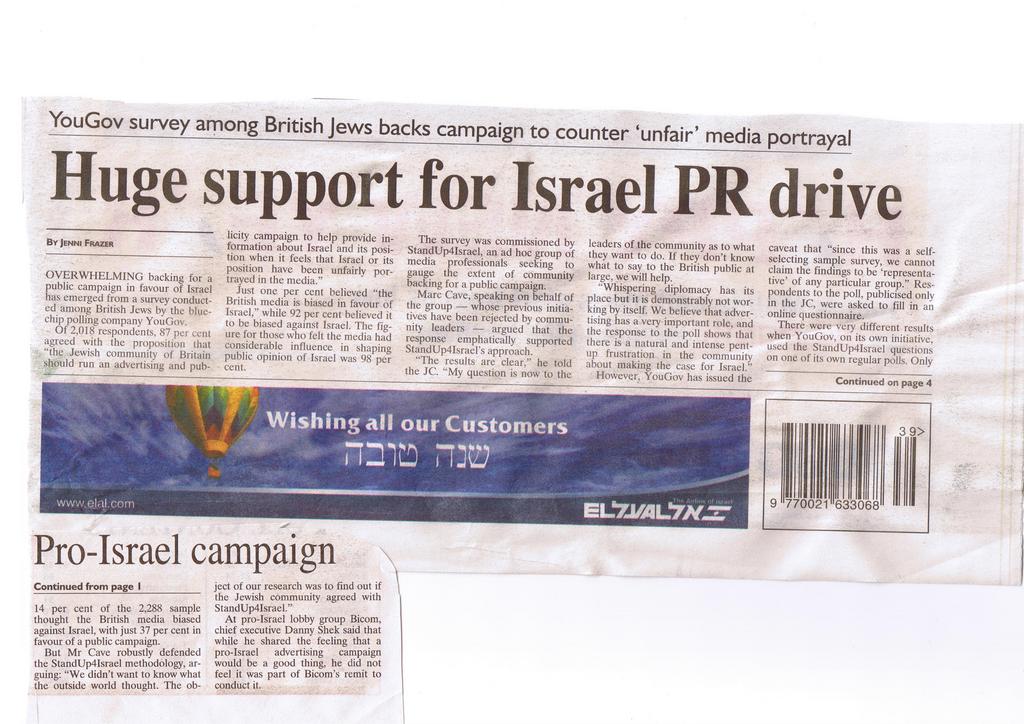
Tuesday, September 27, 2005
Zionism – A Major Obstacle
By Moshé Machover
19 September 2005
In this article I would like to explain why Zionism, as a political ideology, is a major obstacle to resolution of the Palestinian–Israeli conflict.
Let me stress that I am concerned here with Zionist ideology rather than with the practice of the Zionist project. That the latter is an absolute obstacle to resolution of the conflict is self-evident: it is a colonizatory project, an implantation of settlers, which has – necessarily – been implemented at the expense of the mass of indigenous people and by denial of their national rights. Indeed, the Zionist project is the root cause of the conflict.
Zionist ideology is clearly unacceptable from the perspective of the Palestinian Arab people. But here I propose to consider the case against Zionism from a somewhat less obvious perspective – that of the settler nation.
How may the conflict be resolved?
Let us first ask ourselves what we mean by ‘resolution of the conflict’. I have argued elsewhere (1) that the Zionist colonization of Palestine – unlike the colonization of southern Africa, for example – was not based on exploiting the labour power of the indigenous people, but has aimed, quite consciously and deliberately, at their elimination.(2)
In several other settler states belonging to the same species of colonization, the settlers have succeeded in eliminating the entire indigenous population or in reducing it to small and relatively insignificant remnants. The conflict between
colonizers and colonized ended with the overwhelming and virtually total victory of the former, and was in this sense ‘resolved’.
Such an outcome is very unlikely in the case of the Israeli settler state. To be sure, the historical record suggests that Israel’s Zionist leaders will exploit any opportunity (she‘at kosher in Zionist parlance) for further territorial expansion
and ethnic cleansing. Moreover, the more daring among them will attempt actively to create such opportunities. But however far this process may realistically be pushed, Israel will always find itself surrounded by Arabs, by the Arab nation, of which the Palestinian Arab people is a constituent part.(3)
In the end, the conflict in this case can only be resolved by accommodating the two national groups directly involved: the Palestinian Arabs and the Hebrews.(4) And no accommodation can be a true resolution unless it is based on equality of group
(collective) rights between these two national groups (as well as equality of individual rights to all). This is a minimal necessary condition because its absence means, by definition, that one of these groups will be underprivileged and oppressed. National oppression inexorably leads to national struggle – the very opposite of resolution.
Note that I am not specifying any state-institutional framework for an equality-based resolution. In principle, many alternative frameworks are possible. I do not wish to enter here into the controversy between those who support the socalled ‘two-state solution’ and those who advocate a single ‘secular’ state.(5) In my opinion, this controversy, in the way it is actually conducted, is a diversion. Given the present
balance of power, no true resolution is possible in the short or medium term. In these circumstances a ‘two-state’ settlement is bound to be a travesty: a nominally independent Palestinian ‘state’ that is in reality a disconnected set of Indian Reservations policed by corrupt elites acting as proxies for a dominant Israel – a regional hegemonic nuclear super-power, in its turn a local hatchet man for the global hyper-power. A one-state setup will be no better: an extension of direct military occupation and subjugation.
The regional context
But no balance of power lasts forever. A proper resolution will become possible in the longer term, given a radical socio-political transformation of the Arab world and some form of unification of the Arab nation (of which the Palestinian Arab people is a component). In such circumstances a resolution of the Palestinian–Israeli conflict will necessarily be embedded in a regional constellation, a confederation including the entire Arab East. For this reason it is, in my opinion, an error to think of a resolution of the conflict within a framework confined to the borders of Palestine /Israel (whether as a single state or as divided into two states) in isolation from its regional context.
The impossible as enemy of the difficult
Let me return to the main theme: an accommodation of the two national entities, based on equality of collective national rights.
We must not underestimate the enormous difficulty of such accommodation.
The Hebrew nation will have to give up its long-standing dominance and the privileges that go with it. That this is just doesn’t make it easy. Indeed, it can only become
realistic given a balance of power very different from the present one.
But precisely in such circumstances it will be very difficult for the Palestinian Arabs to accept that the Hebrew nation, created in the Palestinian homeland as a consequence of Zionist colonization, ought to be accommodated and granted equal national rights.
The great difficulty that this represents for mainstream Palestinian nationalism is made clear by arguments put forward by Fateh (the dominant component of the PLO led by the late Yasir ‘Arafat) as far back as 1970, advocating its call for a ‘Secular Democratic Palestine’.(6) By that time, mainstream Palestinian nationalism was coming to terms with the painful realization that the Israelis were there to stay, and had to be accommodated in a future free Palestine. But it denied the highly inconvenient fact that Zionist colonization had given birth to a new Hebrew nation – a fact that is indeed an enormously complicating factor in the conflict. The adjective ‘secular’ in the formula ‘Secular Democratic Palestine’ encoded this denial. In a programmatic article – unsigned, but to my certain knowledge written by Nabil Sha‘ath (then one of
the main Fateh ideologues and now a senior minister in the Palestinian Authority) – Fateh explicitly rejected the idea of a bi-national Palestine as a ‘misconception’: ‘[t]he call for a non-sectarian Palestine should not be confused with … a binational
state’. It argued that in the reality of Palestine ‘the term bi-national and the Arab-Jewish dichotomy [are] meaningless, or at best quite dubious’. Moreover, the article stresses that ‘[t]he liberated Palestine will be part of the Arab Homeland, and will not be another alien state within it’;and looks forward to ‘[t]he eventual unity of Palestine with other Arab States’.(7)
In the programmatic formula ‘Secular Democratic Palestine’ proposed at that time by Fateh, the adjective ‘secular’ was inserted not in opposition to ‘theocratic’ (a theocratic democratic state is in any case a nonsensical concept) but in opposition to ‘bi-national’. The intention was to present the Palestinian–Israeli conflict in religious terms and to propose a future Palestine in which Jews would have individual
equality and freedom of religious worship in a country whose nationality would be Arab.
Yet without accepting the fact that a Hebrew nation exists, and without according it national rights equal to those of the Palestinian Arab people, the conflict cannot be resolved. Let me repeat: inequality is oppression, the opposite of resolution. It will be the delicate task of the most progressive political forces among the Palestinians (and in the region as a whole) to persuade the Palestinian masses of
this.(8)
It is at this point that Zionist ideology constitutes a major obstacle. For Zionism – like a father denying the existence of his unwanted child – denies the existence of a Hebrew nation, newly created in Palestine/Israel. (9)It shares this denial with
mainstream Palestinian nationalism (as illustrated by the programmatic article quoted above), but for a very different reason. According to Zionist ideology, all the Jews around the world constitute a single nation. The true homeland of every Jew is not the country in which s/he may have been born and in which his or her family may have resided for generations. The homeland of this alleged nation is the Biblical Land of
Israel, over which it has an ancient inalienable – indeed Godgiven – national right. Non-Jews living in the Jewish homeland are mere foreign interlopers. Zionist colonization is justified as ‘return to the homeland’ – a right possessed by Jews but denied to those foreign interlopers, the Palestinian refugees, who have been legitimately evicted from the Jewish homeland. There is no Hebrew nation but merely members of the worldwide Jewish nation who have already returned to their homeland, an advance guard of their brethren in the Diaspora, who have a right – indeed a sacred duty – to follow the vanguard and be ‘ingathered’ in the Land of Israel.
Now, my argument is quite simple. In an eventual accommodation, in the framework of a resolution of the Palestinian–Israeli conflict, the Hebrew nation can legitimately claim acceptance as an actually existing nation.
The only justification of this difficult claim is the pragmatic one, that otherwise the conflict cannot be resolved.
But it cannot possibly make and justify this claim while it is in thrall to an ideology that denies its own national existence and instead claims a right over the whole Land of Israel on behalf of an alleged worldwide nation. No accommodation, no resolution, will be possible so long as Israelis subscribe to a claim that demands from the Palestinians (and from the Arab nation as a whole) not only retroactive legitimation of past Zionist colonization, but, in effect, an acceptance of an alleged continuing right to future further ‘ingathering’ – which implies further colonization and expansion. Such an impossible claim precludes a true resolution of the conflict.
1 See my article Is it Apartheid?, November 2004; posted in various websites, e.g..
2 In Zionist parlance, this ethnic cleansing is referred to as ‘transfer’. On its planning and early stages, see Nur Masalha, Expulsion of the Palestinians: The Concept of ‘Transfer’ in Zionist Political Thought, 1882-1948, Washington, 1992
3 This is quite different from the case of, say, the US, which was able to fulfil its ‘manifest destiny’ by occupying and ethnically cleansing the whole space from the Atlantic to the Pacific.
4 The latter are commonly called ‘Israeli Jews’. I have long preferred the term ‘Hebrews’, because ‘Jew’ is an ambiguous term, which can denote religious rather (or as well as) ethnic affiliation. On the other hand, the Hebrew nation is most clearly
characterized by its use of the Hebrew language as a common means of everyday and cultural discourse.
5 For a discussion of the ideology coded by the term ‘secular’ in the slogan ‘Secular Democratic Palestine’, see below.
6 This referred of course to the whole of Palestine. At that time the
PLO had not yet agreed to accept a mere rump of the country.
7 ‘Towards the Democratic Palestine’, Fateh (English-language newspaper published by the Information Office of the Palestine Liberation Movement) Vol II, No. 2; 19 January 1970. My emphasis.
8 The Democratic Popular Front for the Liberation of Palestine (PDFLP), the most left-wing faction of the PLO, has indeed gone a long way towards accepting this idea.
9 The formation of a new nation is a common characteristic of settler states where colonization was not based on exploiting the labour power of the indigenous people, but on eliminating them. New settler nations were created in North America and Australia, but not in Algeria or India.
By Moshé Machover
19 September 2005
In this article I would like to explain why Zionism, as a political ideology, is a major obstacle to resolution of the Palestinian–Israeli conflict.
Let me stress that I am concerned here with Zionist ideology rather than with the practice of the Zionist project. That the latter is an absolute obstacle to resolution of the conflict is self-evident: it is a colonizatory project, an implantation of settlers, which has – necessarily – been implemented at the expense of the mass of indigenous people and by denial of their national rights. Indeed, the Zionist project is the root cause of the conflict.
Zionist ideology is clearly unacceptable from the perspective of the Palestinian Arab people. But here I propose to consider the case against Zionism from a somewhat less obvious perspective – that of the settler nation.
How may the conflict be resolved?
Let us first ask ourselves what we mean by ‘resolution of the conflict’. I have argued elsewhere (1) that the Zionist colonization of Palestine – unlike the colonization of southern Africa, for example – was not based on exploiting the labour power of the indigenous people, but has aimed, quite consciously and deliberately, at their elimination.(2)
In several other settler states belonging to the same species of colonization, the settlers have succeeded in eliminating the entire indigenous population or in reducing it to small and relatively insignificant remnants. The conflict between
colonizers and colonized ended with the overwhelming and virtually total victory of the former, and was in this sense ‘resolved’.
Such an outcome is very unlikely in the case of the Israeli settler state. To be sure, the historical record suggests that Israel’s Zionist leaders will exploit any opportunity (she‘at kosher in Zionist parlance) for further territorial expansion
and ethnic cleansing. Moreover, the more daring among them will attempt actively to create such opportunities. But however far this process may realistically be pushed, Israel will always find itself surrounded by Arabs, by the Arab nation, of which the Palestinian Arab people is a constituent part.(3)
In the end, the conflict in this case can only be resolved by accommodating the two national groups directly involved: the Palestinian Arabs and the Hebrews.(4) And no accommodation can be a true resolution unless it is based on equality of group
(collective) rights between these two national groups (as well as equality of individual rights to all). This is a minimal necessary condition because its absence means, by definition, that one of these groups will be underprivileged and oppressed. National oppression inexorably leads to national struggle – the very opposite of resolution.
Note that I am not specifying any state-institutional framework for an equality-based resolution. In principle, many alternative frameworks are possible. I do not wish to enter here into the controversy between those who support the socalled ‘two-state solution’ and those who advocate a single ‘secular’ state.(5) In my opinion, this controversy, in the way it is actually conducted, is a diversion. Given the present
balance of power, no true resolution is possible in the short or medium term. In these circumstances a ‘two-state’ settlement is bound to be a travesty: a nominally independent Palestinian ‘state’ that is in reality a disconnected set of Indian Reservations policed by corrupt elites acting as proxies for a dominant Israel – a regional hegemonic nuclear super-power, in its turn a local hatchet man for the global hyper-power. A one-state setup will be no better: an extension of direct military occupation and subjugation.
The regional context
But no balance of power lasts forever. A proper resolution will become possible in the longer term, given a radical socio-political transformation of the Arab world and some form of unification of the Arab nation (of which the Palestinian Arab people is a component). In such circumstances a resolution of the Palestinian–Israeli conflict will necessarily be embedded in a regional constellation, a confederation including the entire Arab East. For this reason it is, in my opinion, an error to think of a resolution of the conflict within a framework confined to the borders of Palestine /Israel (whether as a single state or as divided into two states) in isolation from its regional context.
The impossible as enemy of the difficult
Let me return to the main theme: an accommodation of the two national entities, based on equality of collective national rights.
We must not underestimate the enormous difficulty of such accommodation.
The Hebrew nation will have to give up its long-standing dominance and the privileges that go with it. That this is just doesn’t make it easy. Indeed, it can only become
realistic given a balance of power very different from the present one.
But precisely in such circumstances it will be very difficult for the Palestinian Arabs to accept that the Hebrew nation, created in the Palestinian homeland as a consequence of Zionist colonization, ought to be accommodated and granted equal national rights.
The great difficulty that this represents for mainstream Palestinian nationalism is made clear by arguments put forward by Fateh (the dominant component of the PLO led by the late Yasir ‘Arafat) as far back as 1970, advocating its call for a ‘Secular Democratic Palestine’.(6) By that time, mainstream Palestinian nationalism was coming to terms with the painful realization that the Israelis were there to stay, and had to be accommodated in a future free Palestine. But it denied the highly inconvenient fact that Zionist colonization had given birth to a new Hebrew nation – a fact that is indeed an enormously complicating factor in the conflict. The adjective ‘secular’ in the formula ‘Secular Democratic Palestine’ encoded this denial. In a programmatic article – unsigned, but to my certain knowledge written by Nabil Sha‘ath (then one of
the main Fateh ideologues and now a senior minister in the Palestinian Authority) – Fateh explicitly rejected the idea of a bi-national Palestine as a ‘misconception’: ‘[t]he call for a non-sectarian Palestine should not be confused with … a binational
state’. It argued that in the reality of Palestine ‘the term bi-national and the Arab-Jewish dichotomy [are] meaningless, or at best quite dubious’. Moreover, the article stresses that ‘[t]he liberated Palestine will be part of the Arab Homeland, and will not be another alien state within it’;and looks forward to ‘[t]he eventual unity of Palestine with other Arab States’.(7)
In the programmatic formula ‘Secular Democratic Palestine’ proposed at that time by Fateh, the adjective ‘secular’ was inserted not in opposition to ‘theocratic’ (a theocratic democratic state is in any case a nonsensical concept) but in opposition to ‘bi-national’. The intention was to present the Palestinian–Israeli conflict in religious terms and to propose a future Palestine in which Jews would have individual
equality and freedom of religious worship in a country whose nationality would be Arab.
Yet without accepting the fact that a Hebrew nation exists, and without according it national rights equal to those of the Palestinian Arab people, the conflict cannot be resolved. Let me repeat: inequality is oppression, the opposite of resolution. It will be the delicate task of the most progressive political forces among the Palestinians (and in the region as a whole) to persuade the Palestinian masses of
this.(8)
It is at this point that Zionist ideology constitutes a major obstacle. For Zionism – like a father denying the existence of his unwanted child – denies the existence of a Hebrew nation, newly created in Palestine/Israel. (9)It shares this denial with
mainstream Palestinian nationalism (as illustrated by the programmatic article quoted above), but for a very different reason. According to Zionist ideology, all the Jews around the world constitute a single nation. The true homeland of every Jew is not the country in which s/he may have been born and in which his or her family may have resided for generations. The homeland of this alleged nation is the Biblical Land of
Israel, over which it has an ancient inalienable – indeed Godgiven – national right. Non-Jews living in the Jewish homeland are mere foreign interlopers. Zionist colonization is justified as ‘return to the homeland’ – a right possessed by Jews but denied to those foreign interlopers, the Palestinian refugees, who have been legitimately evicted from the Jewish homeland. There is no Hebrew nation but merely members of the worldwide Jewish nation who have already returned to their homeland, an advance guard of their brethren in the Diaspora, who have a right – indeed a sacred duty – to follow the vanguard and be ‘ingathered’ in the Land of Israel.
Now, my argument is quite simple. In an eventual accommodation, in the framework of a resolution of the Palestinian–Israeli conflict, the Hebrew nation can legitimately claim acceptance as an actually existing nation.
The only justification of this difficult claim is the pragmatic one, that otherwise the conflict cannot be resolved.
But it cannot possibly make and justify this claim while it is in thrall to an ideology that denies its own national existence and instead claims a right over the whole Land of Israel on behalf of an alleged worldwide nation. No accommodation, no resolution, will be possible so long as Israelis subscribe to a claim that demands from the Palestinians (and from the Arab nation as a whole) not only retroactive legitimation of past Zionist colonization, but, in effect, an acceptance of an alleged continuing right to future further ‘ingathering’ – which implies further colonization and expansion. Such an impossible claim precludes a true resolution of the conflict.
1 See my article Is it Apartheid?, November 2004; posted in various websites, e.g.
2 In Zionist parlance, this ethnic cleansing is referred to as ‘transfer’. On its planning and early stages, see Nur Masalha, Expulsion of the Palestinians: The Concept of ‘Transfer’ in Zionist Political Thought, 1882-1948, Washington, 1992
3 This is quite different from the case of, say, the US, which was able to fulfil its ‘manifest destiny’ by occupying and ethnically cleansing the whole space from the Atlantic to the Pacific.
4 The latter are commonly called ‘Israeli Jews’. I have long preferred the term ‘Hebrews’, because ‘Jew’ is an ambiguous term, which can denote religious rather (or as well as) ethnic affiliation. On the other hand, the Hebrew nation is most clearly
characterized by its use of the Hebrew language as a common means of everyday and cultural discourse.
5 For a discussion of the ideology coded by the term ‘secular’ in the slogan ‘Secular Democratic Palestine’, see below.
6 This referred of course to the whole of Palestine. At that time the
PLO had not yet agreed to accept a mere rump of the country.
7 ‘Towards the Democratic Palestine’, Fateh (English-language newspaper published by the Information Office of the Palestine Liberation Movement) Vol II, No. 2; 19 January 1970. My emphasis.
8 The Democratic Popular Front for the Liberation of Palestine (PDFLP), the most left-wing faction of the PLO, has indeed gone a long way towards accepting this idea.
9 The formation of a new nation is a common characteristic of settler states where colonization was not based on exploiting the labour power of the indigenous people, but on eliminating them. New settler nations were created in North America and Australia, but not in Algeria or India.
Monday, September 26, 2005
As the Arabs See the Jews (1947)
By: King Abdullah of Jordan
I am especially delighted to address an American audience, for the tragic problem of Palestine will never be solved without American understanding, American sympathy, American support.
So many billions of words have been written about Palestine—perhaps more than on any other subject in history—that I hesitate to add to them. Yet I am compelled to do so, for I am reluctantly convinced that the world in general, and America in particular, knows almost nothing of the true case for the Arabs.
We Arabs follow, perhaps far more than you think, the press of America. We are frankly disturbed to find that for every word printed on the Arab side, a thousand are printed on the Zionist side.
There are many reasons for this. You have many millions of Jewish citizens interested in this question. They are highly vocal and wise in the ways of publicity. There are few Arab citizens in America, and we are as yet unskilled in the technique of modern propaganda.
The results have been alarming for us. In your press we see a horrible caricature and are told it is our true portrait. In all justice, we cannot let this pass by default.
Our case is quite simple: For nearly 2,000 years Palestine has been almost 100 per cent Arab. It is still preponderantly Arab today, in spite of enormous Jewish immigration. But if this immigration continues we shall soon be outnumbered—a minority in our home.
Palestine is a small and very poor country, about the size of your state of Vermont. Its Arab population is only about 1,200,000. Already we have had forced on us, against our will, some 600,000 Zionist Jews. We are threatened with many hundreds of thousands more.
Our position is so simple and natural that we are amazed it should even be questioned. It is exactly the same position you in America take in regard to the unhappy European Jews. You are sorry for them, but you do not want them in your country.
We do not want them in ours, either. Not because they are Jews, but because they are foreigners. We would not want hundreds of thousands of foreigners in our country, be they Englishmen or Norwegians or Brazilians or whatever.
Think for a moment: In the last 25 years we have had one third of our entire population forced upon us. In America that would be the equivalent of 45,000,000 complete strangers admitted to your country, over your violent protest, since 1921. How would you have reacted to that?
Because of our perfectly natural dislike of being overwhelmed in our own homeland, we are called blind nationalists and heartless anti-Semites. This charge would be ludicrous were it not so dangerous.
No people on earth have been less "anti-Semitic" than the Arabs. The persecution of the Jews has been confined almost entirely to the Christian nations of the West. Jews, themselves, will admit that never since the Great Dispersion did Jews develop so freely and reach such importance as in Spain when it was an Arab possession. With very minor exceptions, Jews have lived for many centuries in the Middle East, in complete peace and friendliness with their Arab neighbours.
Damascus, Baghdad, Beirut and other Arab centres have always contained large and prosperous Jewish colonies. Until the Zionist invasion of Palestine began, these Jews received the most generous treatment—far, far better than in Christian Europe. Now, unhappily, for the first time in history, these Jews are beginning to feel the effects of Arab resistance to the Zionist assault. Most of them are as anxious as Arabs to stop it. Most of these Jews who have found happy homes among us resent, as we do, the coming of these strangers.
I was puzzled for a long time about the odd belief which apparently persists in America that Palestine has somehow "always been a Jewish land." Recently an American I talked to cleared up this mystery. He pointed out that the only things most Americans know about Palestine are what they read in the Bible. It was a Jewish land in those days, they reason, and they assume it has always remained so.
Nothing could be farther from the truth. It is absurd to reach so far back into the mists of history to argue about who should have Palestine today, and I apologise for it. Yet the Jews do this, and I must reply to their "historic claim." I wonder if the world has ever seen a stranger sight than a group of people seriously pretending to claim a land because their ancestors lived there some 2,000 years ago!
If you suggest that I am biased, I invite you to read any sound history of the period and verify the facts.
Such fragmentary records as we have indicate that the Jews were wandering nomads from Iraq who moved to southern Turkey, came south to Palestine, stayed there a short time, and then passed to Egypt, where they remained about 400 years. About 1300 BC (according to your calendar) they left Egypt and gradually conquered most—but not all—of the inhabitants of Palestine.
It is significant that the Philistines—not the Jews—gave their name to the country: "Palestine" is merely the Greek form of "Philistia."
Only once, during the empire of David and Solomon, did the Jews ever control nearly—but not all—the land which is today Palestine. This empire lasted only 70 years, ending in 926 BC. Only 250 years later the Kingdom of Judah had shrunk to a small province around Jerusalem, barely a quarter of modern Palestine.
In 63 BC the Jews were conquered by Roman Pompey, and never again had even the vestige of independence. The Roman Emperor Hadrian finally wiped them out about 135 AD. He utterly destroyed Jerusalem, rebuilt under another name, and for hundreds of years no Jew was permitted to enter it. A handful of Jews remained in Palestine but the vast majority were killed or scattered to other countries, in the Diaspora, or the Great Dispersion. From that time Palestine ceased to be a Jewish country, in any conceivable sense.
This was 1,815 years ago, and yet the Jews solemnly pretend they still own Palestine! If such fantasy were allowed, how the map of the world would dance about!
Italians might claim England, which the Romans held so long. England might claim France, "homeland" of the conquering Normans. And the French Normans might claim Norway, where their ancestors originated. And incidentally, we Arabs might claim Spain, which we held for 700 years.
Many Mexicans might claim Spain, "homeland" of their forefathers. They might even claim Texas, which was Mexican until 100 years ago. And suppose the American Indians claimed the "homeland" of which they were the sole, native, and ancient occupants until only some 450 years ago!
I am not being facetious. All these claims are just as valid—or just as fantastic—as the Jewish "historic connection" with Palestine. Most are more valid.
In any event, the great Moslem expansion about 650 AD finally settled things. It dominated Palestine completely. From that day on, Palestine was solidly Arabic in population, language, and religion. When British armies entered the country during the last war, they found 500,000 Arabs and only 65,000 Jews.
If solid, uninterrupted Arab occupation for nearly 1,300 years does not make a country "Arab", what does?
The Jews say, and rightly, that Palestine is the home of their religion. It is likewise the birthplace of Christianity, but would any Christian nation claim it on that account? In passing, let me say that the Christian Arabs—and there are many hundreds of thousands of them in the Arab World—are in absolute agreement with all other Arabs in opposing the Zionist invasion of Palestine.
May I also point out that Jerusalem is, after Mecca and Medina, the holiest place in Islam. In fact, in the early days of our religion, Moslems prayed toward Jerusalem instead of Mecca.
The Jewish "religious claim" to Palestine is as absurd as the "historic claim." The Holy Places, sacred to three great religions, must be open to all, the monopoly of none. Let us not confuse religion and politics.
We are told that we are inhumane and heartless because do not accept with open arms the perhaps 200,000 Jews in Europe who suffered so frightfully under Nazi cruelty, and who even now—almost three years after war’s end—still languish in cold, depressing camps.
Let me underline several facts. The unimaginable persecution of the Jews was not done by the Arabs: it was done by a Christian nation in the West. The war which ruined Europe and made it almost impossible for these Jews to rehabilitate themselves was fought by the Christian nations of the West. The rich and empty portions of the earth belong, not to the Arabs, but to the Christian nations of the West.
And yet, to ease their consciences, these Christian nations of the West are asking Palestine—a poor and tiny Moslem country of the East—to accept the entire burden. "We have hurt these people terribly," cries the West to the East. "Won’t you please take care of them for us?"
We find neither logic nor justice in this. Are we therefore "cruel and heartless nationalists"?
We are a generous people: we are proud that "Arab hospitality" is a phrase famous throughout the world. We are a humane people: no one was shocked more than we by the Hitlerite terror. No one pities the present plight of the desperate European Jews more than we.
But we say that Palestine has already sheltered 600,000 refugees. We believe that is enough to expect of us—even too much. We believe it is now the turn of the rest of the world to accept some of them.
I will be entirely frank with you. There is one thing the Arab world simply cannot understand. Of all the nations of the earth, America is most insistent that something be done for these suffering Jews of Europe. This feeling does credit to the humanity for which America is famous, and to that glorious inscription on your Statue of Liberty.
And yet this same America—the richest, greatest, most powerful nation the world has ever known—refuses to accept more than a token handful of these same Jews herself!
I hope you will not think I am being bitter about this. I have tried hard to understand that mysterious paradox, and I confess I cannot. Nor can any other Arab.
Perhaps you have been informed that "the Jews in Europe want to go to no other place except Palestine."
This myth is one of the greatest propaganda triumphs of the Jewish Agency for Palestine, the organisation which promotes with fanatic zeal the emigration to Palestine. It is a subtle half-truth, thus doubly dangerous.
The astounding truth is that nobody on earth really knows where these unfortunate Jews really want to go!
You would think that in so grave a problem, the American, British, and other authorities responsible for the European Jews would have made a very careful survey, probably by vote, to find out where each Jew actually wants to go. Amazingly enough this has never been done! The Jewish Agency has prevented it.
Some time ago the American Military Governor in Germany was asked at a press conference how he was so certain that all Jews there wanted to go to Palestine. His answer was simple: "My Jewish advisors tell me so." He admitted no poll had ever been made. Preparations were indeed begun for one, but the Jewish Agency stepped in to stop it.
The truth is that the Jews in German camps are now subjected to a Zionist pressure campaign which learned much from the Nazi terror. It is dangerous for a Jew to say that he would rather go to some other country, not Palestine. Such dissenters have been severely beaten, and worse.
Not long ago, in Palestine, nearly 1,000 Austrian Jews informed the international refugee organisation that they would like to go back to Austria, and plans were made to repatriate them.
The Jewish Agency heard of this, and exerted enough political pressure to stop it. It would be bad propaganda for Zionism if Jews began leaving Palestine. The nearly 1,000 Austrian are still there, against their will.
The fact is that most of the European Jews are Western in culture and outlook, entirely urban in experience and habits. They cannot really have their hearts set on becoming pioneers in the barren, arid, cramped land which is Palestine.
One thing, however, is undoubtedly true. As matters stand now, most refugee Jews in Europe would, indeed, vote for Palestine, simply because they know no other country will have them.
If you or I were given a choice between a near-prison camp for the rest of our lives—or Palestine—we would both choose Palestine, too.
But open up any other alternative to them—give them any other choice, and see what happens!
No poll, however, will be worth anything unless the nations of the earth are willing to open their doors—just a little—to the Jews. In other words, if in such a poll a Jew says he wants to go to Sweden, Sweden must be willing to accept him. If he votes for America, you must let him come in.
Any other kind of poll would be a farce. For the desperate Jew, this is no idle testing of opinion: this is a grave matter of life or death. Unless he is absolutely sure that his vote means something, he will always vote for Palestine, so as not to risk his bird in the hand for one in the bush.
In any event, Palestine can accept no more. The 65,000 Jews in Palestine in 1918 have jumped to 600,000 today. We Arabs have increased, too, but not by immigration. The Jews were then a mere 11 per cent of our population. Today they are one third of it.
The rate of increase has been terrifying. In a few more years—unless stopped now—it will overwhelm us, and we shall be an important minority in our own home.
Surely the rest of the wide world is rich enough and generous enough to find a place for 200,000 Jews—about one third the number that tiny, poor Palestine has already sheltered. For the rest of the world, it is hardly a drop in the bucket. For us it means national suicide.
We are sometimes told that since the Jews came to Palestine, the Arab standard of living has improved. This is a most complicated question. But let us even assume, for the argument, that it is true. We would rather be a bit poorer, and masters of our own home. Is this unnatural?
The sorry story of the so-called "Balfour Declaration," which started Zionist immigration into Palestine, is too complicated to repeat here in detail. It is grounded in broken promises to the Arabs—promises made in cold print which admit no denying.
We utterly deny its validity. We utterly deny the right of Great Britain to give away Arab land for a "national home" for an entirely foreign people.
Even the League of Nations sanction does not alter this. At the time, not a single Arab state was a member of the League. We were not allowed to say a word in our own defense.
I must point out, again in friendly frankness, that America was nearly as responsible as Britain for this Balfour Declaration. President Wilson approved it before it was issued, and the American Congress adopted it word for word in a joint resolution on 30th June, 1922.
In the 1920s, Arabs were annoyed and insulted by Zionist immigration, but not alarmed by it. It was steady, but fairly small, as even the Zionist founders thought it would remain. Indeed for some years, more Jews left Palestine than entered it—in 1927 almost twice as many.
But two new factors, entirely unforeseen by Britain or the League or America or the most fervent Zionist, arose in the early thirties to raise the immigration to undreamed heights. One was the World Depression; the second the rise of Hitler.
In 1932, the year before Hitler came to power, only 9,500 Jews came to Palestine. We did not welcome them, but we were not afraid that, at that rate, our solid Arab majority would ever be in danger.
But the next year—the year of Hitler—it jumped to 30,000! In 1934 it was 42,000! In 1935 it reached 61,000!
It was no longer the orderly arrival of idealist Zionists. Rather, all Europe was pouring its frightened Jews upon us. Then, at last, we, too, became frightened. We knew that unless this enormous influx stopped, we were, as Arabs, doomed in our Palestine homeland. And we have not changed our minds.
I have the impression that many Americans believe the trouble in Palestine is very remote from them, that America had little to do with it, and that your only interest now is that of a humane bystander.
I believe that you do not realise how directly you are, as a nation, responsible in general for the whole Zionist move and specifically for the present terrorism. I call this to your attention because I am certain that if you realise your responsibility you will act fairly to admit it and assume it.
Quite aside from official American support for the "National Home" of the Balfour Declaration, the Zionist settlements in Palestine would have been almost impossible, on anything like the current scale, without American money. This was contributed by American Jewry in an idealistic effort to help their fellows.
The motive was worthy: the result were disastrous. The contributions were by private individuals, but they were almost entirely Americans, and, as a nation, only America can answer for it.
The present catastrophe may be laid almost entirely at your door. Your government, almost alone in the world, is insisting on the immediate admission of 100,000 more Jews into Palestine—to be followed by countless additional ones. This will have the most frightful consequences in bloody chaos beyond anything ever hinted at in Palestine before.
It is your press and political leadership, almost alone in the world, who press this demand. It is almost entirely American money which hires or buys the "refugee ships" that steam illegally toward Palestine: American money which pays their crews. The illegal immigration from Europe is arranged by the Jewish Agency, supported almost entirely by American funds. It is American dollars which support the terrorists, which buy the bullets and pistols that kill British soldiers—your allies—and Arab citizens—your friends.
We in the Arab world were stunned to hear that you permit open advertisements in newspapers asking for money to finance these terrorists, to arm them openly and deliberately for murder. We could not believe this could really happen in the modern world. Now we must believe it: we have seen the advertisements with our own eyes.
I point out these things because nothing less than complete frankness will be of use. The crisis is too stark for mere polite vagueness which means nothing.
I have the most complete confidence in the fair-mindedness and generosity of the American public. We Arabs ask no favours. We ask only that you know the full truth, not half of it. We ask only that when you judge the Palestine question, you put yourselves in our place.
What would your answer be if some outside agency told you that you must accept in America many millions of utter strangers in your midst—enough to dominate your country—merely because they insisted on going to America, and because their forefathers had once lived there some 2,000 years ago?
Our answer is the same.
And what would be your action if, in spite of your refusal, this outside agency began forcing them on you?
Ours will be the same.
From The American Magazine, November 1947, Forwarded by the JPLO List, September 8, 2005
By: King Abdullah of Jordan
I am especially delighted to address an American audience, for the tragic problem of Palestine will never be solved without American understanding, American sympathy, American support.
So many billions of words have been written about Palestine—perhaps more than on any other subject in history—that I hesitate to add to them. Yet I am compelled to do so, for I am reluctantly convinced that the world in general, and America in particular, knows almost nothing of the true case for the Arabs.
We Arabs follow, perhaps far more than you think, the press of America. We are frankly disturbed to find that for every word printed on the Arab side, a thousand are printed on the Zionist side.
There are many reasons for this. You have many millions of Jewish citizens interested in this question. They are highly vocal and wise in the ways of publicity. There are few Arab citizens in America, and we are as yet unskilled in the technique of modern propaganda.
The results have been alarming for us. In your press we see a horrible caricature and are told it is our true portrait. In all justice, we cannot let this pass by default.
Our case is quite simple: For nearly 2,000 years Palestine has been almost 100 per cent Arab. It is still preponderantly Arab today, in spite of enormous Jewish immigration. But if this immigration continues we shall soon be outnumbered—a minority in our home.
Palestine is a small and very poor country, about the size of your state of Vermont. Its Arab population is only about 1,200,000. Already we have had forced on us, against our will, some 600,000 Zionist Jews. We are threatened with many hundreds of thousands more.
Our position is so simple and natural that we are amazed it should even be questioned. It is exactly the same position you in America take in regard to the unhappy European Jews. You are sorry for them, but you do not want them in your country.
We do not want them in ours, either. Not because they are Jews, but because they are foreigners. We would not want hundreds of thousands of foreigners in our country, be they Englishmen or Norwegians or Brazilians or whatever.
Think for a moment: In the last 25 years we have had one third of our entire population forced upon us. In America that would be the equivalent of 45,000,000 complete strangers admitted to your country, over your violent protest, since 1921. How would you have reacted to that?
Because of our perfectly natural dislike of being overwhelmed in our own homeland, we are called blind nationalists and heartless anti-Semites. This charge would be ludicrous were it not so dangerous.
No people on earth have been less "anti-Semitic" than the Arabs. The persecution of the Jews has been confined almost entirely to the Christian nations of the West. Jews, themselves, will admit that never since the Great Dispersion did Jews develop so freely and reach such importance as in Spain when it was an Arab possession. With very minor exceptions, Jews have lived for many centuries in the Middle East, in complete peace and friendliness with their Arab neighbours.
Damascus, Baghdad, Beirut and other Arab centres have always contained large and prosperous Jewish colonies. Until the Zionist invasion of Palestine began, these Jews received the most generous treatment—far, far better than in Christian Europe. Now, unhappily, for the first time in history, these Jews are beginning to feel the effects of Arab resistance to the Zionist assault. Most of them are as anxious as Arabs to stop it. Most of these Jews who have found happy homes among us resent, as we do, the coming of these strangers.
I was puzzled for a long time about the odd belief which apparently persists in America that Palestine has somehow "always been a Jewish land." Recently an American I talked to cleared up this mystery. He pointed out that the only things most Americans know about Palestine are what they read in the Bible. It was a Jewish land in those days, they reason, and they assume it has always remained so.
Nothing could be farther from the truth. It is absurd to reach so far back into the mists of history to argue about who should have Palestine today, and I apologise for it. Yet the Jews do this, and I must reply to their "historic claim." I wonder if the world has ever seen a stranger sight than a group of people seriously pretending to claim a land because their ancestors lived there some 2,000 years ago!
If you suggest that I am biased, I invite you to read any sound history of the period and verify the facts.
Such fragmentary records as we have indicate that the Jews were wandering nomads from Iraq who moved to southern Turkey, came south to Palestine, stayed there a short time, and then passed to Egypt, where they remained about 400 years. About 1300 BC (according to your calendar) they left Egypt and gradually conquered most—but not all—of the inhabitants of Palestine.
It is significant that the Philistines—not the Jews—gave their name to the country: "Palestine" is merely the Greek form of "Philistia."
Only once, during the empire of David and Solomon, did the Jews ever control nearly—but not all—the land which is today Palestine. This empire lasted only 70 years, ending in 926 BC. Only 250 years later the Kingdom of Judah had shrunk to a small province around Jerusalem, barely a quarter of modern Palestine.
In 63 BC the Jews were conquered by Roman Pompey, and never again had even the vestige of independence. The Roman Emperor Hadrian finally wiped them out about 135 AD. He utterly destroyed Jerusalem, rebuilt under another name, and for hundreds of years no Jew was permitted to enter it. A handful of Jews remained in Palestine but the vast majority were killed or scattered to other countries, in the Diaspora, or the Great Dispersion. From that time Palestine ceased to be a Jewish country, in any conceivable sense.
This was 1,815 years ago, and yet the Jews solemnly pretend they still own Palestine! If such fantasy were allowed, how the map of the world would dance about!
Italians might claim England, which the Romans held so long. England might claim France, "homeland" of the conquering Normans. And the French Normans might claim Norway, where their ancestors originated. And incidentally, we Arabs might claim Spain, which we held for 700 years.
Many Mexicans might claim Spain, "homeland" of their forefathers. They might even claim Texas, which was Mexican until 100 years ago. And suppose the American Indians claimed the "homeland" of which they were the sole, native, and ancient occupants until only some 450 years ago!
I am not being facetious. All these claims are just as valid—or just as fantastic—as the Jewish "historic connection" with Palestine. Most are more valid.
In any event, the great Moslem expansion about 650 AD finally settled things. It dominated Palestine completely. From that day on, Palestine was solidly Arabic in population, language, and religion. When British armies entered the country during the last war, they found 500,000 Arabs and only 65,000 Jews.
If solid, uninterrupted Arab occupation for nearly 1,300 years does not make a country "Arab", what does?
The Jews say, and rightly, that Palestine is the home of their religion. It is likewise the birthplace of Christianity, but would any Christian nation claim it on that account? In passing, let me say that the Christian Arabs—and there are many hundreds of thousands of them in the Arab World—are in absolute agreement with all other Arabs in opposing the Zionist invasion of Palestine.
May I also point out that Jerusalem is, after Mecca and Medina, the holiest place in Islam. In fact, in the early days of our religion, Moslems prayed toward Jerusalem instead of Mecca.
The Jewish "religious claim" to Palestine is as absurd as the "historic claim." The Holy Places, sacred to three great religions, must be open to all, the monopoly of none. Let us not confuse religion and politics.
We are told that we are inhumane and heartless because do not accept with open arms the perhaps 200,000 Jews in Europe who suffered so frightfully under Nazi cruelty, and who even now—almost three years after war’s end—still languish in cold, depressing camps.
Let me underline several facts. The unimaginable persecution of the Jews was not done by the Arabs: it was done by a Christian nation in the West. The war which ruined Europe and made it almost impossible for these Jews to rehabilitate themselves was fought by the Christian nations of the West. The rich and empty portions of the earth belong, not to the Arabs, but to the Christian nations of the West.
And yet, to ease their consciences, these Christian nations of the West are asking Palestine—a poor and tiny Moslem country of the East—to accept the entire burden. "We have hurt these people terribly," cries the West to the East. "Won’t you please take care of them for us?"
We find neither logic nor justice in this. Are we therefore "cruel and heartless nationalists"?
We are a generous people: we are proud that "Arab hospitality" is a phrase famous throughout the world. We are a humane people: no one was shocked more than we by the Hitlerite terror. No one pities the present plight of the desperate European Jews more than we.
But we say that Palestine has already sheltered 600,000 refugees. We believe that is enough to expect of us—even too much. We believe it is now the turn of the rest of the world to accept some of them.
I will be entirely frank with you. There is one thing the Arab world simply cannot understand. Of all the nations of the earth, America is most insistent that something be done for these suffering Jews of Europe. This feeling does credit to the humanity for which America is famous, and to that glorious inscription on your Statue of Liberty.
And yet this same America—the richest, greatest, most powerful nation the world has ever known—refuses to accept more than a token handful of these same Jews herself!
I hope you will not think I am being bitter about this. I have tried hard to understand that mysterious paradox, and I confess I cannot. Nor can any other Arab.
Perhaps you have been informed that "the Jews in Europe want to go to no other place except Palestine."
This myth is one of the greatest propaganda triumphs of the Jewish Agency for Palestine, the organisation which promotes with fanatic zeal the emigration to Palestine. It is a subtle half-truth, thus doubly dangerous.
The astounding truth is that nobody on earth really knows where these unfortunate Jews really want to go!
You would think that in so grave a problem, the American, British, and other authorities responsible for the European Jews would have made a very careful survey, probably by vote, to find out where each Jew actually wants to go. Amazingly enough this has never been done! The Jewish Agency has prevented it.
Some time ago the American Military Governor in Germany was asked at a press conference how he was so certain that all Jews there wanted to go to Palestine. His answer was simple: "My Jewish advisors tell me so." He admitted no poll had ever been made. Preparations were indeed begun for one, but the Jewish Agency stepped in to stop it.
The truth is that the Jews in German camps are now subjected to a Zionist pressure campaign which learned much from the Nazi terror. It is dangerous for a Jew to say that he would rather go to some other country, not Palestine. Such dissenters have been severely beaten, and worse.
Not long ago, in Palestine, nearly 1,000 Austrian Jews informed the international refugee organisation that they would like to go back to Austria, and plans were made to repatriate them.
The Jewish Agency heard of this, and exerted enough political pressure to stop it. It would be bad propaganda for Zionism if Jews began leaving Palestine. The nearly 1,000 Austrian are still there, against their will.
The fact is that most of the European Jews are Western in culture and outlook, entirely urban in experience and habits. They cannot really have their hearts set on becoming pioneers in the barren, arid, cramped land which is Palestine.
One thing, however, is undoubtedly true. As matters stand now, most refugee Jews in Europe would, indeed, vote for Palestine, simply because they know no other country will have them.
If you or I were given a choice between a near-prison camp for the rest of our lives—or Palestine—we would both choose Palestine, too.
But open up any other alternative to them—give them any other choice, and see what happens!
No poll, however, will be worth anything unless the nations of the earth are willing to open their doors—just a little—to the Jews. In other words, if in such a poll a Jew says he wants to go to Sweden, Sweden must be willing to accept him. If he votes for America, you must let him come in.
Any other kind of poll would be a farce. For the desperate Jew, this is no idle testing of opinion: this is a grave matter of life or death. Unless he is absolutely sure that his vote means something, he will always vote for Palestine, so as not to risk his bird in the hand for one in the bush.
In any event, Palestine can accept no more. The 65,000 Jews in Palestine in 1918 have jumped to 600,000 today. We Arabs have increased, too, but not by immigration. The Jews were then a mere 11 per cent of our population. Today they are one third of it.
The rate of increase has been terrifying. In a few more years—unless stopped now—it will overwhelm us, and we shall be an important minority in our own home.
Surely the rest of the wide world is rich enough and generous enough to find a place for 200,000 Jews—about one third the number that tiny, poor Palestine has already sheltered. For the rest of the world, it is hardly a drop in the bucket. For us it means national suicide.
We are sometimes told that since the Jews came to Palestine, the Arab standard of living has improved. This is a most complicated question. But let us even assume, for the argument, that it is true. We would rather be a bit poorer, and masters of our own home. Is this unnatural?
The sorry story of the so-called "Balfour Declaration," which started Zionist immigration into Palestine, is too complicated to repeat here in detail. It is grounded in broken promises to the Arabs—promises made in cold print which admit no denying.
We utterly deny its validity. We utterly deny the right of Great Britain to give away Arab land for a "national home" for an entirely foreign people.
Even the League of Nations sanction does not alter this. At the time, not a single Arab state was a member of the League. We were not allowed to say a word in our own defense.
I must point out, again in friendly frankness, that America was nearly as responsible as Britain for this Balfour Declaration. President Wilson approved it before it was issued, and the American Congress adopted it word for word in a joint resolution on 30th June, 1922.
In the 1920s, Arabs were annoyed and insulted by Zionist immigration, but not alarmed by it. It was steady, but fairly small, as even the Zionist founders thought it would remain. Indeed for some years, more Jews left Palestine than entered it—in 1927 almost twice as many.
But two new factors, entirely unforeseen by Britain or the League or America or the most fervent Zionist, arose in the early thirties to raise the immigration to undreamed heights. One was the World Depression; the second the rise of Hitler.
In 1932, the year before Hitler came to power, only 9,500 Jews came to Palestine. We did not welcome them, but we were not afraid that, at that rate, our solid Arab majority would ever be in danger.
But the next year—the year of Hitler—it jumped to 30,000! In 1934 it was 42,000! In 1935 it reached 61,000!
It was no longer the orderly arrival of idealist Zionists. Rather, all Europe was pouring its frightened Jews upon us. Then, at last, we, too, became frightened. We knew that unless this enormous influx stopped, we were, as Arabs, doomed in our Palestine homeland. And we have not changed our minds.
I have the impression that many Americans believe the trouble in Palestine is very remote from them, that America had little to do with it, and that your only interest now is that of a humane bystander.
I believe that you do not realise how directly you are, as a nation, responsible in general for the whole Zionist move and specifically for the present terrorism. I call this to your attention because I am certain that if you realise your responsibility you will act fairly to admit it and assume it.
Quite aside from official American support for the "National Home" of the Balfour Declaration, the Zionist settlements in Palestine would have been almost impossible, on anything like the current scale, without American money. This was contributed by American Jewry in an idealistic effort to help their fellows.
The motive was worthy: the result were disastrous. The contributions were by private individuals, but they were almost entirely Americans, and, as a nation, only America can answer for it.
The present catastrophe may be laid almost entirely at your door. Your government, almost alone in the world, is insisting on the immediate admission of 100,000 more Jews into Palestine—to be followed by countless additional ones. This will have the most frightful consequences in bloody chaos beyond anything ever hinted at in Palestine before.
It is your press and political leadership, almost alone in the world, who press this demand. It is almost entirely American money which hires or buys the "refugee ships" that steam illegally toward Palestine: American money which pays their crews. The illegal immigration from Europe is arranged by the Jewish Agency, supported almost entirely by American funds. It is American dollars which support the terrorists, which buy the bullets and pistols that kill British soldiers—your allies—and Arab citizens—your friends.
We in the Arab world were stunned to hear that you permit open advertisements in newspapers asking for money to finance these terrorists, to arm them openly and deliberately for murder. We could not believe this could really happen in the modern world. Now we must believe it: we have seen the advertisements with our own eyes.
I point out these things because nothing less than complete frankness will be of use. The crisis is too stark for mere polite vagueness which means nothing.
I have the most complete confidence in the fair-mindedness and generosity of the American public. We Arabs ask no favours. We ask only that you know the full truth, not half of it. We ask only that when you judge the Palestine question, you put yourselves in our place.
What would your answer be if some outside agency told you that you must accept in America many millions of utter strangers in your midst—enough to dominate your country—merely because they insisted on going to America, and because their forefathers had once lived there some 2,000 years ago?
Our answer is the same.
And what would be your action if, in spite of your refusal, this outside agency began forcing them on you?
Ours will be the same.
From The American Magazine, November 1947, Forwarded by the JPLO List, September 8, 2005
Subscribe to:
Posts (Atom)
